The expanded format was supposed to make the draw matter less. Thirty-six clubs, eight opponents each, one table, top eight straight through to the last sixteen. Spread the risk across that many fixtures and the serious teams find their level eventually. That was the argument when UEFA sold this thing to us, and for two seasons it mostly held up.
Then Monaco spat out Thursday's schedule and handed Arsenal the hardest set of eight in the competition.
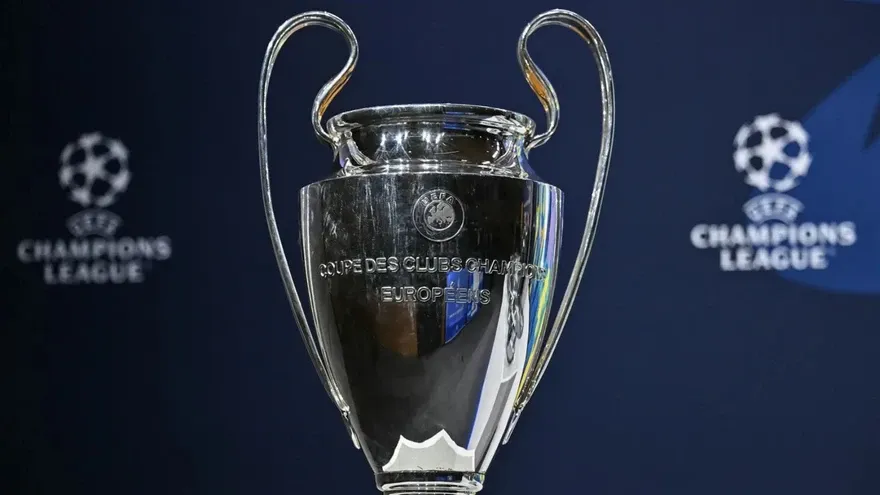
Start with what it took for PSG to be sitting in Pot 1 at all. Budapest, the end of May, and they were second best for an hour. Kai Havertz put Arsenal ahead after five minutes. Ousmane Dembele equalised from the spot and nothing moved in extra time. Gabriel Magalhaes missed the fifth penalty. Luis Enrique had picked the same ten outfield players who started the previous year's final against Inter, which only Real Madrid have ever done, and Madrid are also the only other club to have retained this trophy since the competition was renamed in 1992. Impressive company. It still needed a shootout.
So whether PSG deserve to be favourites for a third straight title is a more open question than the seeding suggests, and the early Champions League betting odds seem to agree, putting them only narrowly ahead of Real Madrid, Barcelona, Arsenal and Manchester City. I would not read much into the ordering. What the pricing does capture is that five or six clubs are now separated by very little, and that the last two finals produced a 5-0 and a shootout, which tells you the range of outcomes available when these sides meet.
Arteta's reward for reaching the final
Beaten finalists get no favours from a supercomputer. Arsenal have Real Madrid, Borussia Dortmund, Lille and Sabah at the Emirates. They go to Bayern Munich, Real Betis, Napoli and Slavia Prague. Three of those four away trips are to teams who finished in their domestic top four, and if you work through the full list of league phase pairings UEFA published after the draw, no other Pot 1 side has been handed anything close.
The Madrid game is the one that will define the autumn, and not only because of the football.
Jose Mourinho has been back at the Bernabeu since the middle of July. Madrid paid Benfica fifteen million euro to get him out of his contract, and Florentino Perez had campaigned for re-election in June partly on the promise of bringing him back. Mourinho's first spell there, between 2010 and 2013, gave Madrid a hundred-point La Liga title and a set of Clasicos that people are still arguing about two decades on. What it never gave them was a European final. Three semi-finals, three exits. He has still not won this competition with the club he keeps coming back to, and he will walk out at the Emirates in the autumn for the first competitive night in north London of his second stint. Quiet is not the word for it.
The rest of the English contingent got off lightly by comparison
Manchester City look comfortable until you separate the two halves. PSG, Sporting, Napoli and AEK Athens at the Etihad is a manageable set. Barcelona, Porto, Leipzig and Lens away is not, because there is no fixture in there where Guardiola can rest anybody.
Liverpool were never getting Real Madrid at home, as it happens. UEFA introduced a rule blocking the same fixture from running with the same home team three seasons in a row, and Anfield had already hosted Madrid twice, winning 2-0 in November 2024 and 1-0 a year after that. Atletico came out instead, with Porto, Villarreal and Lens, and away days at Inter, Club Brugge, Fenerbahce and LASK.
Manchester United return after a long absence with Bayern, Roma and Leipzig at Old Trafford. Aston Villa, though, have the pick of the English home schedules: PSG, Dortmund, Fenerbahce and Viking, which is about as good a run of European nights as Villa Park has had in forty years.
Nine years old, and Barcelona are coming
Four clubs reach this stage for the first time. Cesc Fabregas has dragged Como up from Serie B inside three seasons and will host PSG and Manchester United for his trouble. LASK got here by losing 3-0 to Celtic in Glasgow and then winning the second leg 5-1 after extra time, which is not a normal way to qualify for anything.
But the one worth your attention is Sabah, a club founded nine years ago in Azerbaijan. Their coach, Valdas Dambrauskas, is a Lithuanian who funded his first coaching trip to England with money he won on his country's version of Who Wants to be a Millionaire, then spent a decade and a half working through Latvia, Croatia, Bulgaria, Greece, Cyprus and Hungary before arriving in Baku and winning a domestic double in his first year. His forward Veljko Simic scored six in eight to top the qualifying charts. Their average home attendance in the league last season was under 1,400 people.
In September, Barcelona come to visit. Whatever else this format has done to European football, it has not stopped producing that.
Viking are also back after more than three decades away, which gives Norway two clubs in the main draw for the first time since the turn of the century, and Real Betis have returned after twenty years.
When to watch
Matchday one falls in the second week of September and the league phase runs through to the end of January, when all eighteen final-round fixtures kick off together. The knockout rounds fill February and March, and the final is at Atletico's Metropolitano on 5 June, later in the summer than usual.
For anyone following from India, the two European kick-off slots land at roughly 10:15pm and 12:30am, moving back an hour when the clocks change in late October. Sabah against Barcelona is worth losing an evening over.