India may be missing the biggest football tournament on earth, but its roots will still be present at the competition.
As another FIFA World Cup approaches, Indian football supporters once again find themselves watching from afar. Despite the expansion of the tournament to 48 teams, India failed to qualify, extending a wait that has lasted since the country's lone appearance in 1950. Recent defeats and a FIFA ranking outside the world's top 130 have only highlighted the challenges that remain for Indian football. Yet there is still a unique connection between India and the 2026 World Cup.
Twenty years after Vikash Dhorasoo became the first footballer of Indian origin to play at a FIFA World Cup when he represented France in 2006, four players with Indian heritage are set to grace football's biggest stage. They represent four different nations, come from vastly different backgrounds, and have travelled unique paths to the sport's grandest tournament.
Sarpreet Singh (New Zealand)
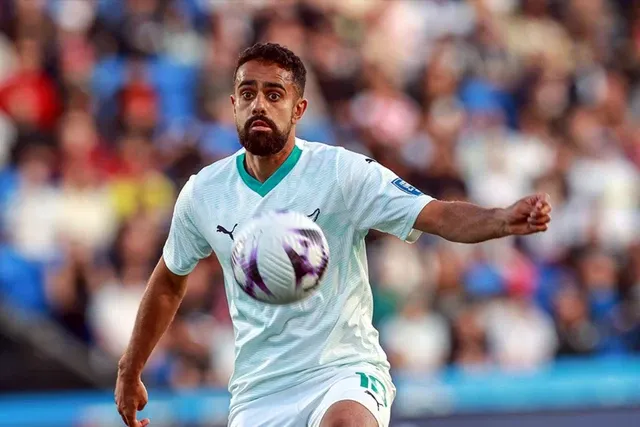
Among the four players, Sarpreet Singh is perhaps the most familiar name to Indian football followers. The attacking midfielder has long been one of New Zealand's brightest talents and is no stranger to Indian audiences. Many supporters first saw him during the 2018 Intercontinental Cup when he featured against Sunil Chhetri's India. Born in Auckland to a Punjabi family, Singh's connection to India has always remained a major part of his identity. His grandparents migrated from Punjab to New Zealand, where subsequent generations built a new life while maintaining strong cultural ties. On the pitch, Singh's journey has been equally remarkable. His creativity, technical quality and intelligence quickly established him as one of New Zealand's most exciting prospects.
His performances eventually earned him a move to Europe and recognition as one of the faces of New Zealand's emerging football generation. Over the past few years, he has become a regular fixture in the national team setup. His ability to operate between midfield and attack gives New Zealand a creative edge that few opponents can ignore. As the Kiwis prepare for the World Cup, Singh is expected to play a central role in their ambitions. For Indian supporters, his presence offers a familiar face and a reminder that footballing talent with Indian roots can thrive on the global stage.
Tahsin Mohammad Jamshid (Qatar)
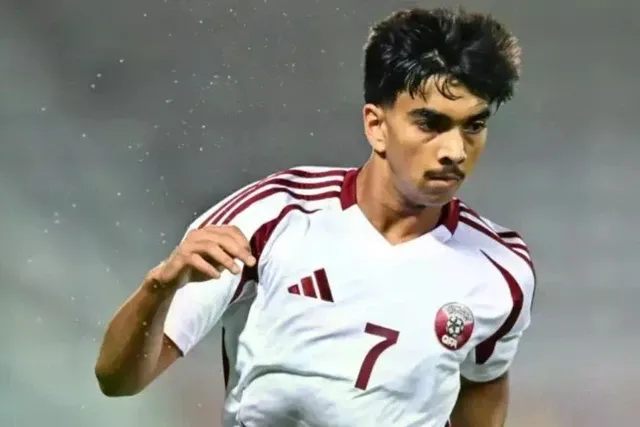
Few stories at this World Cup are as emotional as that of Tahsin Mohammad Jamshid. The 20-year-old winger represents Qatar, but his family's roots trace back to Kerala. His father, Jamshid, was once a talented footballer who played for Calicut University and dreamed of reaching the highest levels of the game. Life, however, had different plans. Seeking better opportunities, Jamshid moved to Qatar, where he built a new future for his family. Yet he never gave up on football entirely. Instead, he channelled his passion into his son. Recognising Tahsin's talent at an early age, he enrolled him in Qatar's prestigious Aspire Academy, one of the most respected football development institutions in Asia. It changed his fortunes.
Tahsin rapidly progressed through the ranks and emerged as one of the country's most promising young players. His pace, direct running and ability to operate across the frontline caught the attention of national team selectors. In 2024, he made his senior debut for Qatar during a World Cup qualifier against Afghanistan. Since then, he has steadily become an important member of the national setup. Now, at just 20 years of age, he is preparing for the biggest tournament of his career. For his father, it represents the fulfilment of a dream that once seemed impossible. For Indian football fans, it is another example of how footballing talent connected to the subcontinent continues to emerge across the world.
Nishan Velupillay (Australia)
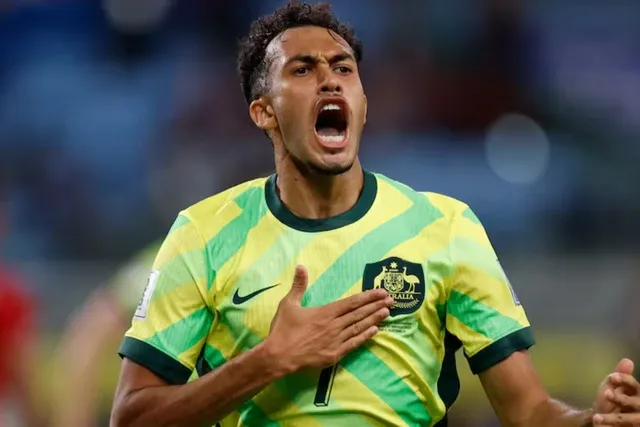
Australia's qualification campaigns have often been built around resilience, organisation and discipline. Yet the current generation is increasingly producing technically gifted attackers capable of changing games in an instant. One of those players is Nishan Velupillay. Born in Australia to Sri Lankan Tamil parents with roots in the Indian subcontinent, Velupillay has steadily developed into one of the most exciting attacking prospects in Australian football. His breakthrough came through the A-League, where his pace and willingness to run directly at defenders quickly earned attention. Comfortable operating as a winger or forward, he possesses the versatility modern coaches value highly.
Velupillay's rise has mirrored Australia's efforts to rejuvenate their squad with younger talent capable of competing against elite opposition. His performances at the domestic level earned him opportunities with the Socceroos, where he has continued to impress. Heading into the World Cup, he is expected to provide Australia with energy, speed and unpredictability in the attacking third. While he may not yet carry the profile of some global superstars, tournaments like the World Cup often create new heroes overnight. Many within Australian football believe Velupillay possesses the attributes to become one of those breakout stars.
Samuel Moutoussamy (DR Congo)
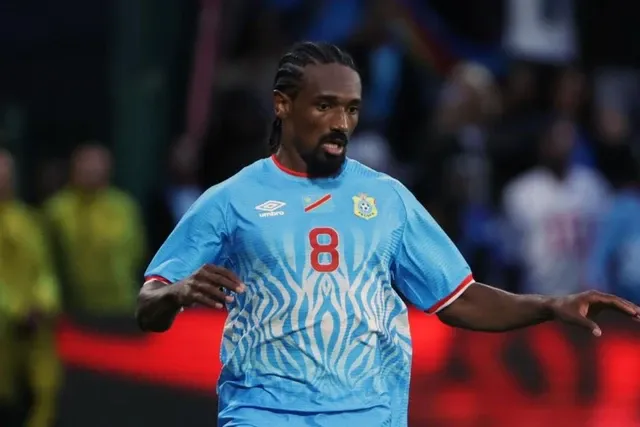
While some players arrive at the World Cup as rising talents, Samuel Moutoussamy arrives as an established international. The midfielder has been one of the key figures behind Congo's remarkable journey to the tournament. For a nation making history on the global stage, his experience has proven invaluable. Moutoussamy's story is deeply connected to multiple cultures. Born in France, he comes from a family with Tamil roots. His father was of Indian origin before the family established connections with Congo. Growing up in Europe, Moutoussamy developed his football education within the French system before eventually committing his international future to Congo. That decision has had a lasting impact.
The midfielder has accumulated nearly 60 appearances for the national team and has become one of its most reliable performers. Known for his composure, tactical intelligence and work rate, he provides balance and leadership in the middle of the pitch. Perhaps most importantly, he has played a significant role in helping Congo qualify for their first-ever FIFA World Cup. For a country embarking on its greatest footballing adventure, Moutoussamy represents both stability and ambition. The 29-year-old now has the opportunity to showcase his qualities on the biggest stage football can offer.
Also Read |