
From being the surprise packages in Qatar to being one of the dark horses in North America, Morocco has made rapid progress in these four years and is poised to bring their flair and energy again this summer. They became the first African and Arab nation to reach the semifinals of the World Cup and will hope to go beyond this time, using a more progressive brand of football this time. However, the challenge is far stiffer this time with the competition expanding and having drawn against Brazil, Scotland and Haiti in Group C, the declared AFCON winners will need to produce their absolute best. Under the tutelage of their former U-20 coach, Mohamed Ouahbi, this time, after Walid Regragui stepped down only three months before the tournament, the Atlas Lions want to display their excellent rise as a football nation on the global stage again.
Morocco FIFA World Cup History
This marks Morocco's seventh appearance in the World Cup since its debut in 1970, which was also hosted in Mexico, one of this tournament's co-hosts. Their second appearance also came when the event returned to the North American nation in 1986, where they achieved their then-best finish in the tournament by reaching the Round of 16 stage. Three group stage exits in their next participation followed until the Atlas Lions shocked the world by scripting one of the greatest underdog tales in the tournament's history in the 2022 edition hosted in Qatar. Built on a strategy of supreme solidity, discipline and razor-sharp counter-attacking football, Morocco did something nations like them can only dream of as ṭhey reached the semifinal stage of the World Cup against all odds.
Defying expectations, Regragui’s side topped a group containing 2018 finalists Croatia, Canada and Belgium without losing a game and beating the latter two, but it was just the start. They stunned Spain in the Round of 16 with a 3-0 penalty shootout victory and also remarkably eliminated Cristiano Ronaldo’s Portugal in the quarterfinals. Their fairytale journey, though, ended with a 2-0 defeat to France in the semifinals, while they lost to the bronze final to Croatia. However, Morocco won more than any other nation in that competition by making their place in the football fans’ hearts worldwide, aside from their obvious passionate support, which was also a big feature in the previous edition’s competition.
Morocco Qualification for the FIFA World Cup 2026
Morocco had a dominant qualifying campaign that illustrated the strength, quality and talent of the current crop of players as they enter the 2026 World Cup with confidence higher than ever. The Atlas Lions topped their CAF qualifiers group by winning all their games, stunningly being the only team in the region to do so and the third team alongside England and Norway to enter the competition in this way. They scored a massive 22 goals, with Ayoub El Kaabi getting the most with four, followed by Ismael Saibari, who bagged ṭhree but the goals were more spread around, making the team difficult to handle. Not only their attack but their solidity was also in full swing as they conceded merely two goals in the entire campaign.
Morocco Form and Preparation for FIFA World Cup 2026
The crucial thing after the qualifiers was that Morocco got to play a lot of competitive games after participating in the Arab Cup and the Africa Cup of Nations. Moreover, they won both the competition, although the latter sparked a lot of controversy. In the Arab Cup hosted in Qatar, the Atlas Lions won the tournament without losing a single game, winning six of the seven games, including the final with a 3-2 victory against Jordan. They conceded just three goals in the entire tournament while scoring 11 times. However, the real spotlight for them was the AFCON and they faced extreme pressure to win the competition hosted on their soil. Even though not at their best, Morocco played just enough effective football to reach the final, topping their group, conceding just a single goal and beating Tanzania, Cameroon and Nigeria, keeping a clean sheet in each.
But Morocco was involved in the most controversial final ever played in the competition's history. Chasing a second title glory and the first in front of their fans, the team won a controversial penalty in the last minute of stoppage time in a tense encounter against Senegal, prompting the team to halt the game in protest of the decision and temporarily walking off the pitch, which caused more delays. When the chaos finally ended, the responsibility fell on Brahim Diaz to dispatch the spot kick to create history, but he tried to do a Panenka in such a critical moment, which landed embarrassingly in Edouard Mendy’s arm. Senegal went on to win the final with an extra-time winner, causing massive heartbreak to the Moroccan fans.
But so they thought, as months later, after hearing an appeal of the disruption caused by the brief walkout by Senegal, Morocco was awarded the title. With the AFCON chaos settled for now, the Atlas Lions started preparation for the World Cup with a new coach at the helm, Mohamed Ouahbi, who assumed his role in March. Under his watch, the team played two games against Ecuador and Paraguay. They came from behind to draw against Ecuador in ṭhe manager’s debut game before securing a 2-1 win against the other CONMEBOL opponents. Keeping aside that AFCON final, Morocco are carrying a sensational 28-game unbeaten run into the tournament.
Morocco Squad for FIFA World Cup 2026
Goalkeepers: Yassine Bounou (Al Hilal), Munir Mohamedi (RS Berkane), Ahmed Tagnaouti (Royal Armed Forces)
Defenders: Noussair Mazraoui (Manchester United), Anass Salah-Eddine (PSV Eindhoven), Youssef Belammari (Al Ahly), Marwane Saâdane (Al Fateh), Chadi Riad (Crystal Palace), Issa Diop (Fulham), Redouane Halhal (KV Mechelen), Achraf Hakimi (Paris St-Germain), Zakaria El Ouahdi (Genk)
Midfielders: Samir El Mourabet (Strasbourg), Ayyoub Bouaddi (Lille), Neil El Aynaoui (Roma), Sofyan Amrabat (Real Betis), Azzedine Ounahi (Girona), Bilal El Khannouss (Stuttgart), Ismael Saibari (PSV Eindhoven)
Forwards: Amine Sbaï (Angers), Chemsdine Talbi (Sunderland), Soufiane Rahimi (Al Ain), Ayoub El Kaabi (Olympiacos), Brahim Diaz (Real Madrid), Yassine Gessime (Strasbourg), Ayoub Amaimouni-Echghouyabe (Eintracht Frankfurt)
Head Coach: Mohamed Ouahbi
Head coach Mohamed Ouahbi made some big calls in selecting the World Cup roster for Morocco, leaving out experienced forward Youssef En-Nesyri from the list despite his playing a crucial part in the team’s sensational journey to the semifinal stage in Qatar, including scoring the towering header against Portugal that became the image representation of their unprecedented feat four years ago. The now Al-Ittihad player also played the AFCON on home soil that finished in January, but the newly appointed Ouahbi has not made the 28-year-old part of his World Cup plans. One of the star names of the nation and also a key figure in that run, Hakim Ziyech, is also not included, even though he is in good form with Wydad Casablanca back in his homeland, although he missed the AFCON with injuries. Bayer Leverkusen’s Eliesse Ben Seghir is also one of the names in the AFCON squad who did not make the cut for the World Cup.
Sofiane Boufal also faced the same fate, despite being named in the preliminary squad, while Rayo Vallecano’s Ilias Akhomach and Amine Adli of Bournemouth have not been considered either. Injuries are also a factor that has influenced his decision, with two key members of the team who contributed immensely in the AFCON, like Abde Ezzalzouli of Real Betis and in that dream run in Qatar, like Nayef Aguerd, have all been dropped from the final squad due to injuries. They are replaced by Amine Sbaï and Marwane Saâdane, respectively. Second-choice keeper Ahmed Tagnaouti is also rewarded with a call-up, having not won a cap for his nation since 2019 after helping his club Royal Armed Forces reach the final of the African Champions League. Morocco was also working on its diaspora for the tournament, to include players like Ayyoub Bouaddi of Lille and the familiar face Issa Diop of Fulham, who has switched allegiances from France.
Strengths of Morocco Football Team
This Morocco team no longer relies on pragmatism as they play on the front foot, play intense football and get at the opposition with their new generation of talents, with the experience of players playing in top leagues in Europe. The AFCON Golden Ball winner and Real Madrid forward, Brahim Diaz, has opened up a new dimension to the team’s attacking strength. There are creative players from midfield now, like Saibari, who scored three goals in six games in the CAF qualifiers. The rising stars blend with the 2022 stalwarts, making them a dangerous outfit, as proven in the AFCON. They have some of the best players in certain positions, like Yassine Bounou, who just keeps getting better with age and his strong reflexes will be needed more than ever. Arguably the best defender in the world and captain for his side, Achraf Hakimi would like to create the spark for the team at the tournament again. Even with their high brand football, Morocco keeps a remarkably solid defence, having conceded only twice in the AFCON and also the same in the qualifiers, making them probably the most balanced side in the World Cup this summer.
Weaknesses of Morocco Football Team
Although the Atlas Lions don’t have a major weakness in the side with their unity and work rate proving hard for any opposition to disrupt, they still have certain issues to address. Morocco had no pressure in the 2022 World Cup as they played the tournament as an underdog and excelled using the tag leveled on them. Four years later, the picture is very different. Ouahbi’s team are now one of the dark horses of the competition and that brings in pressure to produce on the global stage to further certify their excellent football development. That transition has not been smooth for the side. Despite a powerful display in AFCON, they had a lot of hiccups on the way, showing signs of feeling the pressure, missing a lot of big chances and a reminder that they lost the chaotic final of the tournament on the pitch to Senegal. There is an obvious struggle against low blocks, with the side left to labour for victory in such situations, which can make Morocco exciting against Brazil, but look dull against Scotland. A lack of an alternative game plan is also an issue. However, these problems had persisted before Ouahbi took charge, so it might not affect the team after all.
Key players:
Yassine Bounou
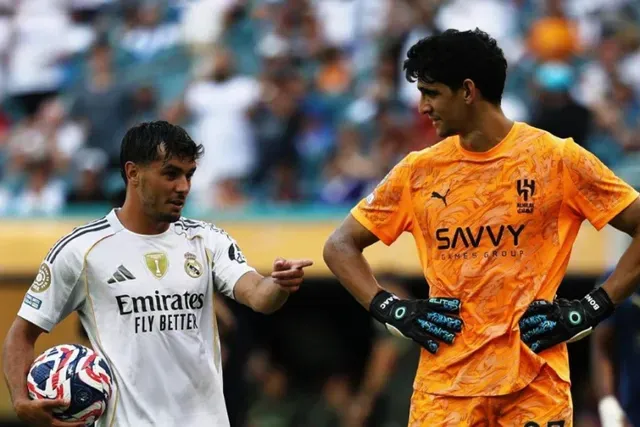
The shot-stopper capable of making the best saves and rising to the biggest moment, Yassine Bounou, is still the man Morocco could rely on. The goalkeeper’s incredible showing at Qatar has lived long in the memories on just the Moroccan fans but neutrals too, but the key factor is that he has maintained that consistency. Unnerved by any challenge or shots he faces, Bounou showed his class again in the AFCON, where he won the Golden Glove, keeping five clean sheets out of seven games in the tournament. The Al-Hilal keeper also maintained a sensational record in the CAF qualifiers of keeping six clean sheets, further cementing his credibility. He will don the gloves for his second World Cup to help his side go on another fascinating run.
Brahim Diaz
If Bounou is tasked with guarding the fort of Morocco from difficult situations at the greatest stage of all, then Brahim Diaz will be the one bringing the arsenal to fire at opponents. The player got the stick for fluffing his Panenka in that AFCON final, which overshadowed the performance he showed overall. He single-handedly put Morocco in the showpiece, bagging five goals to become the highest scorer at the tournament, earning him the Golden Boot. Diaz brings a different spectrum to the Atlas Lions’ attack with his creativity, pace and goals with 13 strikes in 24 appearances as he looks to relaunch himself this summer. It is also an opportunity for him to eliminate that memory of the fan and regain top place in the viewer’s eyes.
Manager: Mohamed Ouahbi

Morocco’s outstanding 2022 World Cup miracle was scripted by Walid Regragui and he also guided the nation to this edition with a perfect qualifying campaign. However, the 50-year-old decided to step down from his managerial role in March 2026, citing the pressure from the AFCON campaign. That means Regragui won’t be overseeing the side, he made history with and played a pivotal role in their team’s transformation, in the upcoming World Cup, with the federation turning to a new manager for the event this summer. This might be Mohamed Ouahbi's first job at the senior level, but he is not unknown to Morocco’s development project, having contributed a lot to it.
The 49-year-old managed the youth teams of the Atlas Lions, including U19, U20 and U23. His most notable achievement came when he guided the U20 team to a historic FIFA U20 World Cup title last year, hosted in Chile. The manner of their triumph was eye-catching as they topped a group containing Spain and Brazil, defeated South Korea, USA, France on penalties and Argentina in the final to clinch ṭhe trophy. Ouahbi now wishes to touch the sky with the senior team and his decision to leave some of the old guards to usher in more fresh and talented players in the senior World Cup signals his intent.
How will Morocco Lineup at the FIFA World Cup 2026?
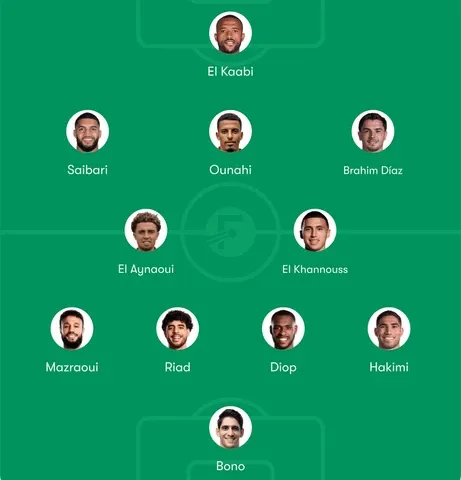
Ouahbi would like to keep Morocco in the 4-2-3-1 formation, going by the two friendlies he managed so far, which is a slight change from the 4-3-3 under his predecessor. However, the approach of both is the same to make Atlas Lions an attacking force, with the starting lineup carrying the pedigree of playing in top leagues in Europe. They also have quality players and necessary depth in every area of the pitch, so it is hard to lock on an exact lineup as rotation is expected. Only Bounou, Hakimi and Mazraoui in ṭhe flanks, Neil El Aynaoui, who has been the trusted lieutenant in midfield and Diaz’s position are fixed. Recently switched allegiance, Diop could earn his competitive debut at the World Cup and could be a fixed figure in the central defence. Chadi Riad is expected to partner him now that Aguerd is injured. Meanwhile, Bilal El Khannouss could partner El Aynaoui in the midfield, just like AFCON, with the latter’s passing and control meeting the energy and creativity of ṭhe Stuttgart player. 18-year-old Bouaddi, who had a breakout season with Lille, could also get the nod. With no Abde, Ismael Saibari, who is attracting interest from Bayern Munich, will take charge of the left-hand side, allowing Azzedine Ounahi, played a crucial role in Qatar to stir interest of big clubs, to slot in the number 10 role. With no En-Neysri, El Kaabi, or Soufiane Rahimi would be the option if Morocco plans to go with a proper number nine.
Morocco Group C Fixtures and Opposition in FIFA World Cup 2026
Sunday, 14 June 2026
Brazil v Morocco - MetLife Stadium, East Rutherford (03:30)
Saturday, 20 June 2026
Scotland v Morocco - Gillette Stadium, Boston (03:30)
Saturday, 25 June 2026
Morocco v Haiti - Mercedes Benz Stadium, Atlanta (03:30)
Morocco FIFA World Cup 2026 Prediction
Morocco has been placed in a difficult group, with the repeat of the 1998 clashes against Scotland and Brazil, but this is something they already faced four years ago with Croatia and Belgium back then. They went the distance in Qatar and now having built a philosophy, they need to accept such challenges with open arms rather than walk away from them. The Atlas Lions also have more leverage this time, with the tournament expansion allowing the top two teams from each group and the eight best third-placed sides moving into the knockouts in the new Round of 32 stage. However, Morocco has done so much hard work to be a side to finish in the top two of their group and has the quality to do so. Should Brazil win Group C and Ouahbi’s side finish second, they will face the winners of Group F, which could be the Netherlands, whereas topping their group could get them a tie with Japan and Sweden, depending upon group standings, of course.
Interestingly, they will not face any big guns if they finish third, if they avoid Germany. But Morocco looks to finish in the top two with a stellar tie against the Netherlands, or, as said, even Japan and Sweden could be in store in the Round of 32. Whether they are capable of facing a talent-filled Dutch side depends on how they open their tournament against Brazil, who are not at their best at the moment, while the game against Scotland will be equal to facing the other options. Even if they are extremely talented, another run to the semifinals looks increasingly unlikely for the side, as now they have the pressure to deliver, teams have studied them out and the expansion of the competition itself, with an additional knockout round introduced, makes it even harder. They almost don’t have the comfort of having the tournament on Arabian soil like last time, although they will co-host in 2030. They are capable of moving into the Round of 16 or even quarterfinals, but ṭhat will take a huge effort again from the team if they don’t receive a favourable tie.