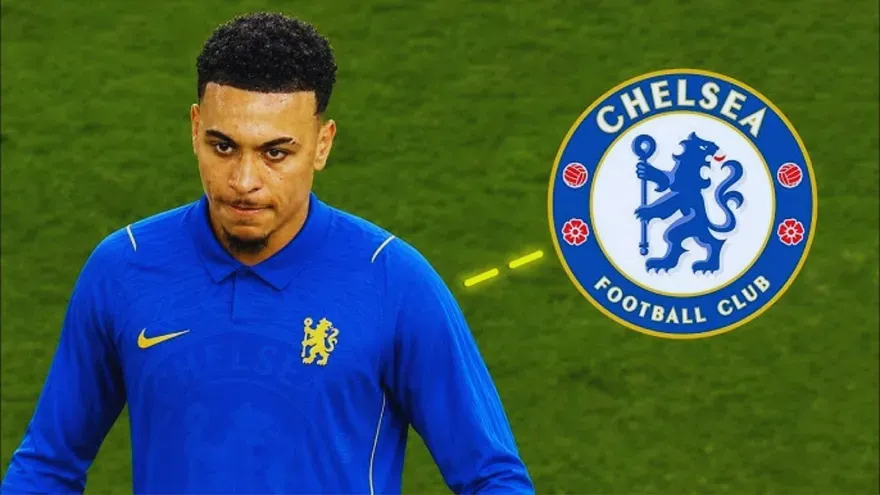
Chelsea have finally replaced Marc Cucurella after the Spanish left-back completed his move to Real Madrid this summer. The Blues have now signed another Spaniard in Pep Chavarría, with the 28-year-old joining from Rayo Vallecano on a five-year contract. The transfer is worth €19 million plus €2 million in potential add-ons, with Chavarría describing the move as the beginning of a new chapter in his career.
But was Chavarría actually brought in to be a direct replacement for Cucurella, or does Chelsea's new signing offer a different profile that could be particularly useful under Xabi Alonso?
Who is Pep Chavarría?
Chavarría is an unconventional Chelsea signing. Unlike many of the club's recent recruits, the Spanish defender is a late bloomer who did not make his La Liga debut until he was 24. His career began in the lower divisions with Figueres and Olot before he joined Zaragoza and eventually earned a move to Rayo Vallecano in 2022.
His development at Rayo has been impressive. He established himself as an important player in the side and has now made 125 appearances for the club across competitions. He was also part of Rayo's run to the UEFA Conference League final last season, further increasing his profile outside Spain.
What stands out most about Chavarría is his energy, intensity and physicality. He is a high-work-rate full-back who can cover significant ground and contribute on both sides of the ball. His pace and stamina allow him to repeatedly make runs up and down the flank, while his defensive aggression makes him capable of competing in one-on-one situations.
Importantly, Chavarría is also comfortable playing as a traditional left-back or higher up as a wing-back. That versatility could become particularly valuable under Alonso, whose tactical system is expected to provide plenty of flexibility in the way Chelsea build attacks.
Chavarría vs Cucurella: How do they differ?
The easiest way to understand this transfer is to recognise that Chavarría is not simply a younger or better version of Cucurella. In fact, there are several areas where Cucurella remains the superior player.
Cucurella developed into one of Chelsea's most tactically intelligent defenders. Under Enzo Maresca, he became particularly effective as an inverted full-back, moving inside into midfield during possession and helping Chelsea create numerical superiority centrally. Chelsea themselves highlighted how regularly he was instructed to invert or move higher up the pitch.
His defensive development was equally impressive. UEFA's technical observers have often praised Cucurella's anticipation, aggression and ability to defend one-on-one, particularly during his Champions League performances.
Chavarría offers something slightly different.
Rather than being primarily defined by his ability to move into midfield, the Rayo defender is more naturally suited to providing width, attacking space and driving forward from the flank. His pace, stamina and work rate make him capable of repeatedly joining attacks while still recovering into his defensive position.
That could make him particularly useful if Alonso opts for systems involving wing-backs. Chavarría has experience playing in a more advanced role and possesses the physical attributes needed to perform the demanding job of constantly transitioning between defence and attack.
There is also a certain tactical simplicity to his game that could benefit Chelsea. Instead of asking him to replicate everything Cucurella did, Alonso can potentially use Chavarría's strengths by giving him responsibility for stretching the opposition, progressing down the left and supplying crosses into the box.
Can Chavarría thrive under Xabi Alonso?
This is arguably the most intriguing aspect of the transfer.
Chavarría's qualities appear well suited to an Alonso side that could switch between a back four and a back three depending on the opposition and game state. His ability to operate as both a full-back and wing-back gives Chelsea another tactical option.
His relentless running could also complement Chelsea's attacking players. Rather than constantly moving inside like Cucurella did under Maresca, Chavarría can provide an outlet on the outside, potentially creating more space for Chelsea's wingers and attacking midfielders to operate centrally.
There is also an interesting personal connection. Reports indicate that Alonso was aware of Chavarría during his time in Spain, with the defender's rise from the lower divisions to becoming an established La Liga player clearly part of his appeal.
Final verdict: Have Chelsea upgraded?
No, at least not in terms of individual quality.
It would be unrealistic to claim that Chelsea have upgraded from Cucurella to Chavarría. Cucurella left Stamford Bridge after a strong final period at the club, making near to 50 appearances in 2025/26 and playing a key role in Chelsea's team.
However, Chelsea do not necessarily need Chavarría to be better than Cucurella.
They need him to be different and effective.
At €19 million plus €2 million in add-ons, Chelsea have brought in an experienced 28-year-old who knows Spanish football, has plenty of energy and can operate in multiple tactical roles.
If Alonso can maximise those qualities, Chavarría could become a very useful player at Stamford Bridge. He may never reach Cucurella's level of technical and tactical refinement, but he could still thrive in Alonso's system and give Chelsea a different weapon on the left.
So, Chelsea have not upgraded at left-back, but they may have found a profile that fits their new manager's football extremely well.