
The history of motorsport spans more than a century, carved by generations of echoes via innovation, endurance, and speed. The story of Audi in motorsport begins with the basic aspiration that came from August Horch. From dominating Group B rallies in the 1910s to the exceptional all-wheel drivetrain. Audi makes a legacy that echoes in today’s generations. After winning the World Rally Championship, WEC, and Dakar Rally, Audi is heading towards the premier class of motorsport in 2026.
The German auto manufacturer in 2022 announced that they are making their way to join the Formula 1 grid as the 11th team in the future. Now in 2026, they will be joining the F1 grid as the engine supplier to the Sauber 1 team. The iconic ‘Four Ring’ is ready to create a new chapter in the FIA World Formula 1 Championship. This article will take you on a journey of Audi’s motorsport legacy that blends traditional engineering and cutting-edge innovation through the eras of Group B rallies, Le Mans, DTM, Formula E, WEC, and now stepping into Formula 1 racing.
Chapter 1: Origin of Audi Racing
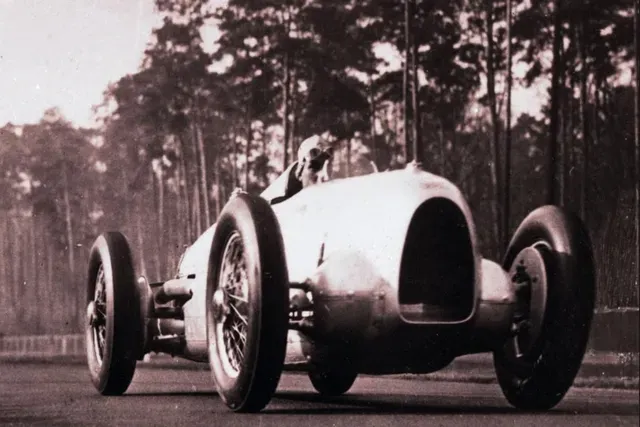
Let us start from where it all begins! Taking you back before the 1st World War, the one brand that stood above the rest was the Four Rings. August Horch founded the company on July 16, 1909. Initially called August Horch Automobilwerke GmbH. Later on, the company was renamed Audi Automobilwerke GmbH. In the early years, August drove the car in races. The company’s victory in the 1906 Herkomer Run was the first reward in Audi’s racing legacy.
In 1909, August Horch won the Austrian Alpine Run three times in a row between 1912 and 1914. Now, with such initial success, Audi cars were famous overnight. Thus, after a brand collaboration, the 1932 merger of Saxony’s four automotive companies partnered together to create one, Audi Auto Union (Audi, DKW, Horch, and Wanderer).
Chapter 2: The Age of Silver Arrows’ Type C & Type D
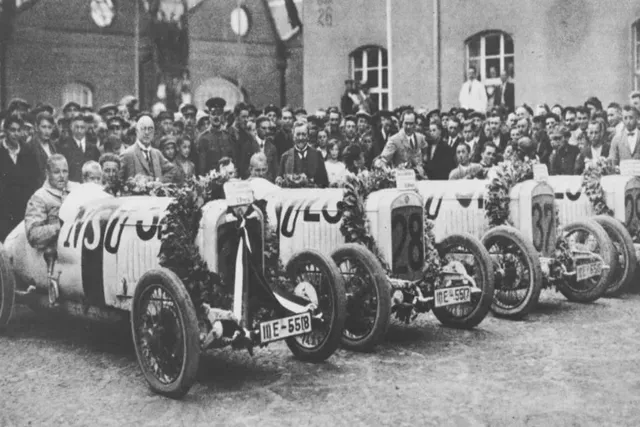
In 1932, the brand took on a whole new dimension in motorsport. After new rules were set for racing in 1934, Audis improved their aerodynamics and lowered their center of gravity. This was the time when early racing fans better knew it as Audi vs. Mercedes, the golden era of German racing cars. As competition and rivalry arose, Audi introduced the Type C cars that were lower than before and covered a top speed of 340 kmph, producing 560 HP of peak power.
With effect from 1939, Audi introduced the all-new Type D models. This is the time when the beginning of the technological era of racing begins. New safety standards were also introduced in the car, reaching new heights, and Auto Union was moving with an upward trajectory. During this period, Audi engraved its name as a top manufacturer in the world of motorsport.
Chapter 3: Audi Quattro Rally Dominance (1980s)
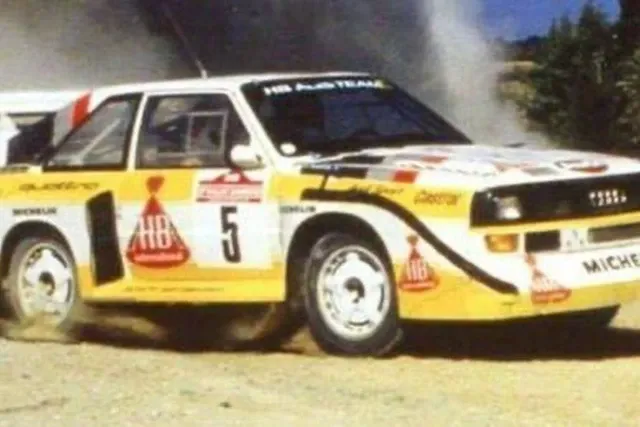
The era of the 1980s brought us many golden hierarchies in racing. Rally racing attracted new generations and reached the majority of countries outside of Germany and Europe. Audi made history with Quattro, and with the introduction of the groundbreaking Quattro all-wheel-drive system in 1980.
Between 1982 and 1984, Audi claimed four consecutive manufacturer titles and three driver championships, transforming the sport with technology that would soon influence road cars worldwide. From 1984 to 1987, Audi won 23 World Championship events from Group 4 to the end of the Group B era.
Trivia: Audi V Lancia, a 2024 movie, depicts the story of the 1983 World Rally Championship rivalry between Audi and Lancia Martini Racing.
Chapter 4: The Le Mans Era (1999-2014)
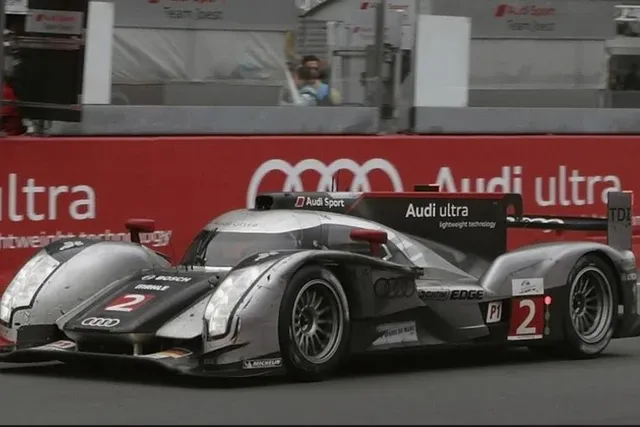
Now, let's enter the next generation of Audi racing prodigy. Audi’s endurance racing campaign launched in 1999 with the Audi R8R at the 24 Hours of Le Mans, quickly establishing its dominance. The iconic Audi R8, R10, TDI, and R15 TDI models secured astonishing Le Mans wins in 2000, 2001, 2002, 2004, and 2005.
Trivia: The introduction of the diesel-powered Audi R10 TDI in 2006 marked Audi’s first overall Le Mans victory with a diesel engine—a first in motorsport history.
By the end of 2014, Audi had won as many as 13 Le Mans titles, cementing its brand name as one of the greatest teams in endurance racing.
Chapter 5: Touring Car and DTM Championships (2000s)
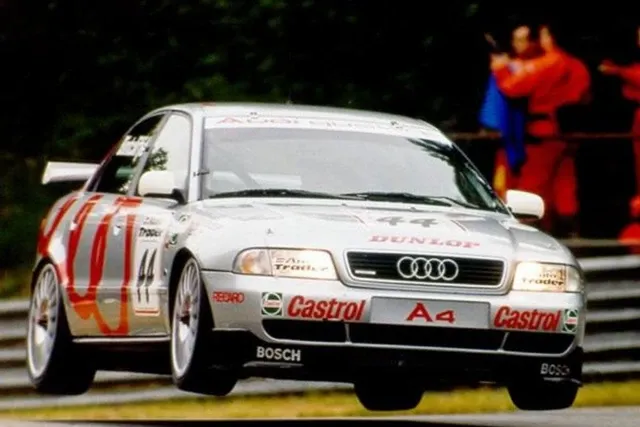
There were times when the Four Rings were conquering the nations through endurance racing. So the brand thought to expand its reign in DTM and touring cars. In the 2000s, when Audi entered the DTM, they were not even competing but struggling. The brand’s rookie season was a disaster. Then, partnering with ABT Sportline, things took a turn, and in 2004, with driver Mattias Ekström, they won their first title. However, in 2011, the Audi A4 DTM with Martin Tomczyk clinched its final title as an automotive brand.
Chapter 6: Electric Racing Era Debuts (2014-2021)
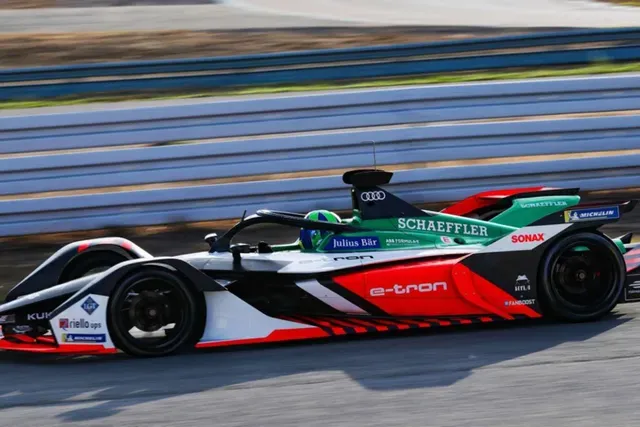
After gaining numerous victories in petrol-powered cars and becoming the first automotive brand to win endurance running with a diesel engine in motorsport history, Audi pushed its trophies further beyond. Formula E was one of the first racing series to go fully electric. Audi was committed to entering it one day. Alas, in 2014, Audi was the first German manufacturer to enter Formula E racing, but in its second edition, the team departed.
From 2018, the brand successfully participated in the Formula E Championship annually. However, by the end of 2018, Audi Sport ABT won its first team championship titles in Formula E. In 2021, the team decided to leave the sport forever, accumulating 14 victories and 47 podium finishes.
Chapter 7: Dakar Rally
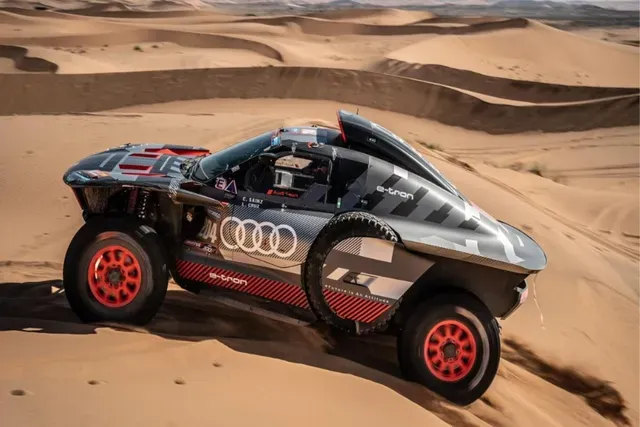
Audi moved from the high-octane tracks to the desert dunes of the Dakar Rally. The brand debuted in 2021 with the latest electric drive Audi RS Q e-tron. The German automaker achieved its first overall victory in 2024 with Carlos Sainz and Lucas Cruz. Audi won four stage victories in its rookie season, but the ultimate achievement came in 2023, when it achieved 14 podium finishes.
Chapter 8: Road to Formula 1 Grid (2026)
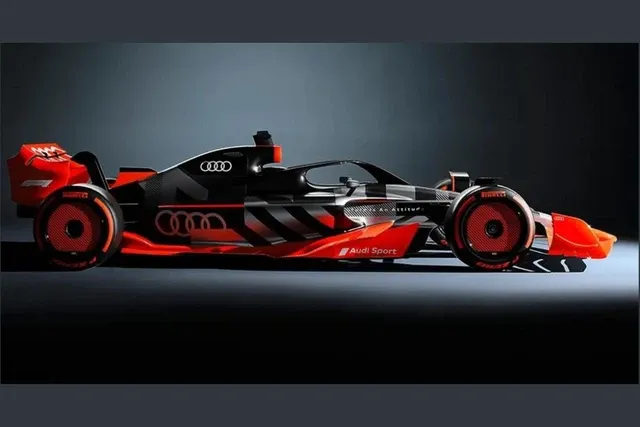
After decades of success in rally, endurance, and touring cars, it's now time for Formula 1. It will be the first time in over a decade that a German factory after Mercedes will build an F1 powertrain for the F1 team.
Yes, you heard it right; Audi acquired the Sauber F1 team to serve as the customer chassis partner, blending Swiss racing heritage with German engineering.
Audi’s Formula 1 team will officially unveil its car and brand identity in January 2026, with public testing to follow ahead of its official debut at the Australian Grand Prix in March. As the 11th team on the grid, Audi marks a new chapter in F1 history.
What’s Ahead?
Audi’s journey to Formula 1 is a story of legacy, transformation, and future-focused ambition. From pioneering rally techniques and dominating endurance racing to launching one of the most anticipated entries in modern Formula 1.
For the Fans!
Hope F1 fans are eager to see the 11th F1 team on the grid with Sergio Perez’s comeback in F1. If you want to know more about the Audi F1 Project, please subscribe to us to read more news from the world of Formula 1 and global motorsport.