
Australia arrives at the FIFA World Cup 2026 carrying the confidence of a team that has repeatedly exceeded expectations on football's biggest stage. After reaching the Round of 16 in Qatar 2022 and pushing eventual champions Argentina all the way, Australia entered this tournament with growing belief under head coach Tony Popovic. A strong qualification campaign, an increasingly balanced squad and the emergence of exciting young talents have given supporters hope that the Socceroos can once again become one of the World Cup's most difficult teams to break down. However, they are placed in a challenging Group D alongside Paraguay, Turkey and the tournament’s co-hosts USA, heightening their stake at the global stage.
Australia FIFA World Cup History
Australia made their FIFA World Cup debut at the 1974 tournament in West Germany. The Socceroos struggled against more established footballing nations and exited the competition in the group stage without scoring a goal. What followed was a 32-year absence from football's biggest stage, during which Australia suffered numerous heartbreaking qualification defeats. The nation's fortunes changed dramatically in the early 2000s. Led by the likes of Harry Kewell, Mark Viduka, Tim Cahill and Lucas Neill, Australia finally returned to the World Cup in 2006. Under Dutch coach Guus Hiddink, the Socceroos produced one of the greatest moments in Australian football history by reaching the Round of 16 before narrowly losing to eventual champions Italy following a controversial late penalty.
Australia subsequently qualified for the 2010, 2014, 2018 and 2022 FIFA World Cups, establishing themselves as regular participants on the global stage. The 2022 tournament in Qatar proved particularly memorable. Against expectations, Australia reached the Round of 16 for only the second time in their history after coming second in their group, after eventual finalist France, also had taken a shock lead in the 4-1 defeat to them, ahead of African side Tunisia and Denmark, most importantly, whom they remarkably beat to seal their place in the knockout stage. They even pushed eventual champions Argentina all the way before suffering a narrow 2-1 defeat.
Australia Qualification for the FIFA World Cup 2026
Australia’s start to the third round of the AFC qualification journey was horrendous as they shockingly lost to Bahrain, that too at home and then played a disappointing goalless draw against Indonesia, giving real fears that the side might fail to qualify for the World Cup. It prompted the federation to let go of Graham Arnold, under whom the Socceroos made that mesmerising run in Qatar four years ago, to appoint former national team player Tony Popovic in September 2024. He created an immediate impact, stabilising the team's performances, with Australia becoming significantly more organised and difficult to beat. They did not lose a single game from then on, played three draws and registered five victories, which included a 2-1 win against Saudi Arabia in the final qualifying game, which booked their place in the finals this summer. They finished second in their qualifying group, six points ahead of the Middle Eastern side, picking up 19 points from 10 matches and scoring 16 goals while conceding just seven. More in details on How Australia Qualified in FIFA World Cup 2026
Australia Squad for FIFA World Cup 2026
Goalkeepers: Mathew Ryan (Levante), Paul Izzo (Randers), Patrick Beach (Melbourne City)
Defenders: Jordan Bos (Feyenoord), Aziz Behich (Melbourne City), Harry Souttar (Leicester
City), Alessandro Circati (Parma), Lucas Herrington (Colorado Rapids), Cameron Burgess (Swansea), Kai Trewin (New York City FC), Milos Degenek (Apoel Nicosia), Jason Geria (Albirex Niigata), Jacob Italiano (Grazer AK)
Midfielders: Jackson Irvine (St. Pauli), Aiden O'Neill (New York City FC), Paul Okon Jr (Sydney FC), Cameron Devlin (Hearts),
Forwards: Connor Metcalfe (St. Pauli), Mathew Leckie (Melbourne City), Nishan Velupillay (Melbourne Victory), Cristian Volpato (Sassuolo), Nestory Irankunda (Watford), Awer Mabil (Castellón), Ajdin Hrustic (Heracles Almelo), Mohamed Toure (Norwich), Tete Yengi (Machida Zelvia)
Head Coach: Tony Popovic
Strengths of FIFA World Cup
Australia's greatest strength remains their organisation and mentality. The Socceroos are rarely overwhelmed regardless of the opposition. Whether facing traditional football powers or fellow mid-tier nations, Australia consistently remains competitive due to their discipline and work ethic. Defensively, the team possesses considerable strength. Harry Souttar provides leadership, aerial dominance and physical presence at the heart of the defence. Alongside him, players such as Kye Rowles and Alessandro Circati contribute composure and tactical awareness. Another major strength is team cohesion. Australia may not possess the individual star power of elite football nations, but they often function as a highly organised collective unit. Every player understands their role, making the team difficult to break down. The squad also contains valuable tournament experience, particularly through veterans such as Mathew Ryan, Jackson Irvine and Aziz Behich. Most importantly, Australia possesses a mentality built on resilience. The Socceroos have repeatedly exceeded expectations throughout their World Cup history and thrive when underestimated.
Weaknesses of FIFA World Cup
Australia's biggest weakness is the relative lack of elite attacking firepower compared to many of the tournament's strongest nations. While the squad contains hardworking forwards and exciting young prospects, there is no established world-class goalscorer capable of consistently deciding matches at the highest level. Creativity can also become an issue against deep defensive blocks. When opponents sit compactly and deny space, Australia occasionally struggle to generate enough high-quality scoring opportunities. Squad depth may present another concern. While the starting eleven is competitive, injuries to key players such as Harry Souttar or Jackson Irvine could significantly impact the team's balance. Additionally, Australia often concedes possession against stronger opponents. While their defensive structure can compensate for this, sustained periods without the ball inevitably create pressure. Against elite teams, small mistakes can quickly become costly.
Key player: Jackson Irvine

If Australia are to make another deep run at the FIFA World Cup, much of their success will revolve around captain Jackson Irvine. The experienced midfielder has become the heartbeat of the Socceroos, embodying the determination, resilience and leadership that have long defined Australian football. While Australia may not possess the superstar names of some of the tournament favourites, Irvine's influence on the team extends far beyond statistics. Operating as a box-to-box midfielder, Irvine provides balance in every phase of the game. He contributes defensively through his tireless work rate and tactical discipline while also supporting attacks with intelligent movement, late runs into the penalty area and an eye for crucial goals. His ability to connect defence and attack makes him one of the most important players in Tony Popovic's system. Beyond his technical contributions, Irvine serves as the emotional leader of the squad. The captain's experience, professionalism and relentless commitment set the standard for those around him, particularly the younger players emerging within the national team setup.
Talent to watch: Nestory Irankunda
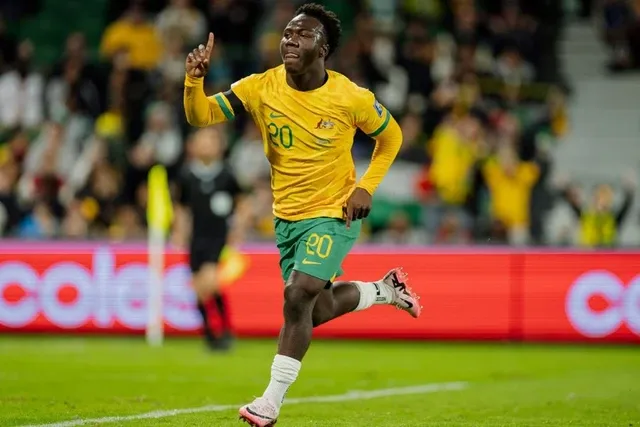
Among Australia's emerging generation, no player excites supporters more than Nestory Irankunda. The young winger is widely regarded as one of the brightest talents Australian football has produced in recent years. Blessed with explosive pace, fearless dribbling and a powerful shot, Irankunda possesses the type of individual quality capable of changing matches in an instant. The factor that makes him particularly exciting is his unpredictability. Defenders often struggle to contain his direct running and willingness to attack opponents one-on-one. The FIFA World Cup 2026 could become the perfect stage for Irankunda to introduce himself to a global audience. While he may not start every match, his impact from the bench could prove decisive in key moments. For many Australian supporters, Irankunda represents the future of the national team and a player capable of elevating the Socceroos to new heights over the coming decade.
Manager: Tony Popovic
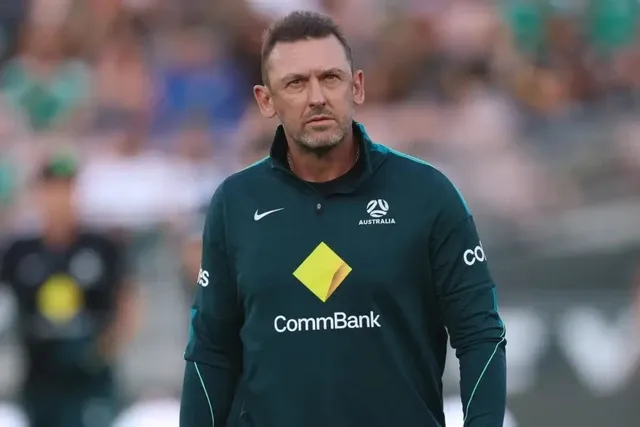
Tony Popovic took charge of Australia in September 2024, replacing Graham Arnold during a crucial stage of the Socceroos' FIFA World Cup 2026 qualification campaign. A former Australian international and member of the country's historic 2006 World Cup squad, Popovic arrived with a strong coaching pedigree following successful spells in the A-League and his AFC Champions League triumph with Western Sydney Wanderers in 2014. Since his appointment, Popovic has brought greater tactical organisation and defensive stability to the national team. Australia have become more compact without the ball while also showing improved composure in possession. He has also overseen the gradual integration of several younger players, helping refresh the squad without sacrificing experience. After successfully guiding the Socceroos to World Cup qualification, Popovic now faces the biggest challenge of his coaching career as he aims to lead Australia beyond the group stage for only the third time in their history.
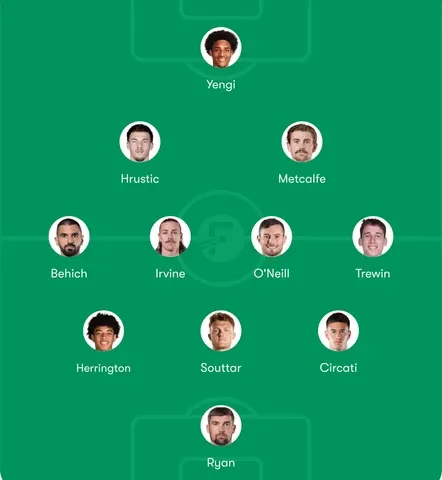
How will Australia Lineup at the FIFA World Cup 2026?
Australia Group D Fixtures and Opposition in FIFA World Cup 2026
Sunday, 14 June 2026
Australia vs Turkey - BC Place, Vancouver (09:30)
Saturday, 20 June 2026
USA vs Australia - Lumen Field Stadium, Seattle (00:30)
Friday, 26 June 2026
Paraguay vs Australia - Levi's Stadium, Santa Clara (07:30)
Australia FIFA World Cup 2026 Prediction
Australia head into the FIFA World Cup 2026 with many of the qualities that have traditionally made the Socceroos difficult opponents. Under Tony Popovic, they are organised defensively, tactically disciplined and capable of frustrating technically superior teams over 90 minutes. Those strengths could keep them competitive in every group-stage fixture. However, it will be hard for the side to be the unpredictable force they were in 2022, despite their excellent discipline. The United States possess greater squad depth, home advantage and several players competing at the highest levels of European football, while Türkiye arrive with a talented generation featuring established stars from some of Europe's biggest leagues. Even Paraguay, often underestimated, are renowned for their physicality, defensive resilience and ability to grind out results in major tournaments.
Hence, progressing from Group D will be a significant challenge. Australia's biggest concern remains their attacking output. While the Socceroos are unlikely to concede heavily, they do not possess the same level of attacking firepower as their group rivals. In tightly contested matches, a lack of clinical finishing could prove costly. The margins between qualification and elimination are expected to be extremely small, and Australia may find themselves needing to convert the few chances they create. The Socceroos certainly have the defensive structure and tournament experience to challenge for a knockout-stage place, but the strength of the opposition means there is little room for error. They are likely to remain competitive throughout the group stage, yet securing enough goals and points to finish above either the United States or Türkiye could ultimately prove a bridge too far.