
Germany is entering the 2026 World Cup with the hope of not only replacing their embarrassment of group stage elimination from the previous two editions, but also making a deep run in North America. Die Mannschaft has every reason to believe they can go the mile possessing an extremely talented in-form squad with a promising tactician at the helm in Julian Nagelsmann. Despite that, the four-time winners have to battle against not-to-be-underestimated Curacao, the Ivory Coast and Ecuador in a tricky Group E to have a chance of playing their first knockout game at the World Cup stage since playing the competition’s final in 2014. The pressure will be huge, but the current generation of footballers has to prove they are up for the task.
Germany FIFA World Cup History
Germany is one of the most successful teams in World Cup history, having won the trophy four times, making them the joint second-most winners of the competition. Only Brazil have won more with five than them. For decades, Germany has been the benchmark for consistency, resilience and tournament football, building a reputation as one of the greatest international teams the sport has ever seen. Across their history, Germany has reached eight World Cup finals. Their journey in the competition began in 1934, but it was after World War II that they emerged as a global powerhouse. Their first title arrived in 1954 with the famous ‘Miracle of Bern’, where they defeated a ruthless Hungary against all odds before further triumphs followed in 1974, 1990 and 2014. The last triumph in Brazil remains one of the greatest campaigns ever produced by a national team, as they became the first European winner of the trophy on South American soil. Led by players such as Philipp Lahm, Bastian Schweinsteiger, Manuel Neuer and Thomas Müller, Germany famously defeated Brazil 7-1 in the semi-finals before overcoming Argentina in the final. However, the years since that triumph have been surprisingly turbulent.
Germany suffered consecutive group-stage eliminations at the 2018 and 2022 World Cups, a shocking decline for a nation accustomed to competing for trophies.
Germany Qualification and Preparation for the FIFA World Cup 2026
Germany will make their 21st appearance at the 2026 World Cup in North America, but it could have easily gone wrong for Julian Nagelsmann’s side, the way they started their qualification journey. Die Mannschaft suffered a shock 2-0 defeat to Slovakia at Bratislava in the opener, but it was also a campaign to show their mentality to turn back in the remaining games to achieve their goal. They won the remaining games without dropping a single point and conceding just one more goal, including taking sweet revenge over Slovakia when they visited Leipzig with a 6-0 humbling in the direct battle for the top spot in the final qualifying game. Their preparation for the finals is also adequate, as they won all four of their preparation games for the World Cup and are carrying a magnificent nine-game winning streak into the competition.
Germany Squad for FIFA World Cup 2026
Goalkeepers: Oliver Baumann (Hoffenheim), Manuel Neuer (Bayern München), Alexander Nübel (VfB Stuttgart)
Defenders: Waldemar Anton (Borussia Dortmund), Nathaniel Brown (Frankfurt), Joshua Kimmich (Bayern Munich), David Raum (RB Leipzig), Antonio Rudiger (Real Madrid, vice-captain), Nico Schlotterbeck (Borussia Dortmund), Jonathan Tah (Bayern Munich), Malick Thiaw (Newcastle)
Midfielders: Nadiem Amiri (Mainz), Leon Goretzka (Bayern Munich), Pascal Gross (Brighton), Jamie Leweling (Stuttgart), Assan Ouédraogo (RB Leipzig), Jamal Musiala (Bayern Munich), Felix Nmecha (Borussia Dortmund), Alexander Pavlovic (Bayern Munich), Angelo Stiller (Stuttgart), Florian Wirtz (Liverpool)
Forwards: Maximilian Beier (Borussia Dortmund), Kai Havertz (Arsenal), Leroy Sane (Galatasaray), Deniz Undav (Stuttgart), Nick Woltemade (Newcastle)
Head Coach: Julian Nagelsmann
There was a surprise inclusion of Manuel Neuer in the World Cup roster after he ended his international retirement, which he had announced post-Euro 2024. Should he feature, the 41-year-old will play in his fifth World Cup, with many believing his latest spectacular showing with Bayern Munich played a role in Julian Nagelsmann calling him up. However, the 2014 World Cup winner is nursing an injury and is in a race against time to be fit for the tournament. Die Mannschaft has been severely affected by injuries, especially in the forward line and all belong to Bayern Munich. Serge Gnabry is a big name missing, as he picked up a thigh injury in April, ruling him out of the tournament this summer. Another huge loss has been Lennart Karl, who had a breakthrough season with the Bavarians and was also named in the final squad for the World Cup. Unfortunately, the 18-year-old talent suffered a muscle injury in training only a week before the tournament kicks off in North America. His replacement is another youngster, RB Leipzig’s Assan Ouédraogo, who spectacularly scored on his senior national debut in November last year.
Strengths of Germany Football Team
Germany’s squad has an excellent blend of youth and experience in store, making them one of the most highly balanced teams in the 2026 World Cup. They already had Antonio Rudiger, Leon Goretzka, Kai Havertz, Leroy Sane and the captain Joshua Kimmich to share their knowledge after being battle tested and now they have added someone who has done it all in Neuer. Despite injuries, their attack looks brilliant with Jamal Musiala firing after his long injury layoff, while Florian Wirtz, despite an underwhelming campaign since his switch to Liverpool, is raring to go for his first World Cup after he missed the last one through an injury. For the first time since the World Cup’s record goalscorer, Miroslav Klose, hung up his boots for the national team, after the 2014 edition, Germany doesn’t have to scramble for a productive number nine, as they have not one but three excellent options in the position. Havertz has significantly excelled in that position and also scored two goals in the last edition, while Denis Undav has been coming off an excellent season with Stuttgart and also scored three goals in the preparation friendlies despite playing no role in the qualifiers. The towering Nick Woltemade, however, did so, scoring four times in six games, even if he hasn’t met expectations for his club Newcastle after his move last summer. Another valuable factor for the squad is that they have an outstanding depth in almost every area of the pitch.
Weaknesses of Germany Football Team
Despite having ideal replacements, key absentees due to injuries will strip the squad of many strengths and qualities they could have utilised in the tournament. Gnabry is a crucial player in Nagelsmann's system due to his intelligence in creating and exploiting spaces, while also forming a fantastic understanding with the other forwards. His versatility in slotting in various positions on the pitch and also interchanging them during the course of the game made him a key cog. His absence will be duly felt, as is Lennart Karl’s, whose exponential rise last season through his immense talent and relentless energy made him a sensation for club and country. The right flank becomes a lot weaker without him, as his width, combination play and ability to take on defenders or cut in to score goals will be missed. It will be too much for 30-year-old Leroy Sane, who is well past his best days, to execute it all. Defensively, there are still questions regarding consistency. While Rüdiger, Tah and Schlotterbeck form a strong defensive unit on paper, Germany have occasionally looked vulnerable against quick transitions. The squad is also burdened with the task of changing the fate of the team that has remarkably failed at the group stages in the last two editions, so it is left to see whether they crumble under pressure or take it as motivation to thrive like never before.
Key Player: Joshua Kimmich

While the focus will be on the attack as Wirtz, Musiala, Havertz and co’s performance will determine where Germany finishes in the competition, there is no arguing about the fact that the nation’s success greatly depends on their captain Joshua Kimmich’s class to stir the team forward. An absolute pillar for this German team, Kimmich is tasked with guiding a youthful squad to be the most dangerous opposition in the finals. His leadership and experience are absolutely necessary for Die Mannschaft, but he will offer more than that. Whether slotting in the right back, as he often does for his nation nowadays or fitting in the midfield, Bayern’s talisman will be responsible for dictating the tempo of the game with his relentless passing. Kimmich’s peripheral vision to pick out his teammates with the most deft deliveries, whether through defence-splitting passes or crosses, while also scoring some stunner himself, makes him a true asset. Now 31 years old, the Stuttgart academy product will wish to be listed among Fritz Walter, Franz Beckenbauer and Philipp Lahm as captains who have lifted the prestigious trophy.
Manager: Julian Nagelsmann
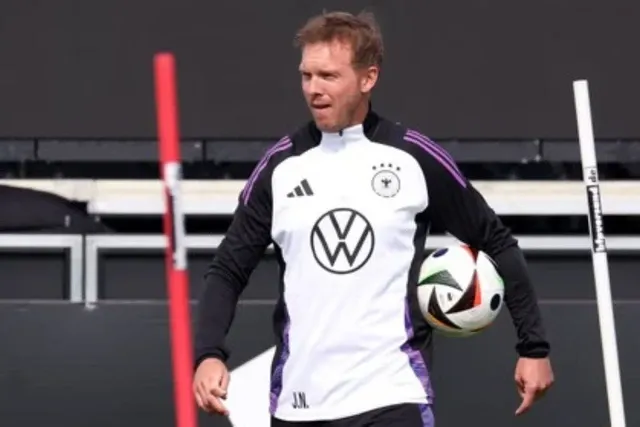
Appointed in September 2023, Julian Nagelsmann inherited a national team struggling for confidence following years of underachievement and making them believers again. Widely regarded as one of football's brightest tactical minds, he immediately began modernising Germany's approach and rebuilding a squad that had become stale. Under Nagelsmann, Germany has embraced a more aggressive and flexible style of football. He has placed significant trust in younger players while retaining experienced leaders such as Manuel Neuer, Joshua Kimmich and Antonio Rüdiger. The result has been a rejuvenated team capable of competing with the world's best once again.
Having built a strong reputation at the club level, once being the youngest coach in Europe, the former Leipzig manager showed glimpses of his genius at the international stage when he guided host Germany to the quarterfinal stage of Euro 2024, narrowly losing to the eventual winners, Spain. A surprise Nations League exit against Portugal and a shock defeat to Slovakia at the start of the qualifiers drove criticism, but he has silenced that too with an excellent turnaround to get to this stage. Now managing the side in the biggest tournament of all, Nagelsmann will be desperate to make it the best tournament of his managerial career to show he is the best in the business.
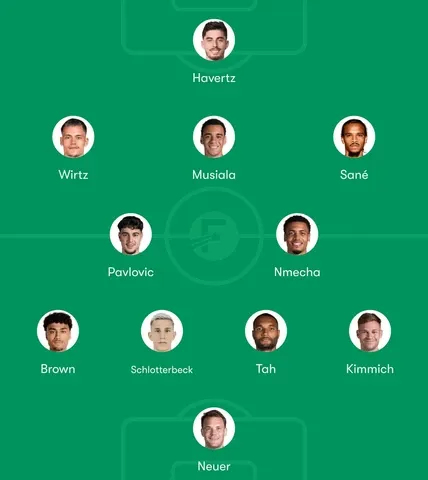
How will Germany lineup at the FIFA World Cup 2026?
Germany Group E Fixtures and Opposition in FIFA World Cup 2026
Sunday, 14 June 2026
Germany vs Curacao - NRG Stadium, Houston (10:30)
Saturday, 21 June 2026
Germany vs Ivory Coast - BMO Field, Toronto (01:30)
Friday, 26 June 2026
Ecuador vs Germany - MetLife Stadium, New Jersey (01:30)
Germany FIFA World Cup 2026 Prediction
Julian Nagelsmann is tasked with a huge job to rewrite Germany’s supremacy at the World Cup after back-to-back group stage exits since their last glory in Brazil more than a decade ago. Die Mannschaft are no longer among the conversation to win the tournament, so they have to behave as darkhorses rather. Unlike the dominant German teams of previous generations, this squad still has something to prove on the biggest stage. Their success will depend on whether their young stars can handle the big tournament pressure, especially in the knockout stage, as a competition powerhouse like them cannot afford an early elimination from the global stage for the third straight time. More so when the World Cup has expanded to 48 nations, with eight third-placed teams also making it out of the group stage. However, anything other than the first place in Group E would be disappointing for Germany.
The task won’t be easy, as they are placed in a tricky group where only their tournament opener against the third-lowest-ranked nation in the competition and debutants Curacao looks straightforward, barring any miracles. Ivory Coast is the most youthful team in the competition and carries a real spirit in them, having stunned a side like France in a preparation friendly, while Ecuador is the most dogged side in the tournament, let alone in the group. Still, there will be no excuse if Germany fails to progress to the knockout stage again. Should they top their group, they will face a favourable opponent with the possibility of facing either South Africa, Bosnia, Canada, Scotland, Australia, or Tunisia in the Round of 32. However, they are bound to face a fiercely talented France in the Round of 16, which might end their road as this squad doesn’t look to possess enough to overcome one of the competition favourites.
Also Read | Germany FIFA World Cup Records and Stats