
Norway are entering the 2026 World Cup as a potential darkhorse, assembling one of the most talented squads in the tournament, helping the side seal qualification to a first major competition after nearly three decades. It is the first participation for Stale Solbakken at the pinnacle tournament of world football for the first time since 1998, after a historical qualification campaign where they ended another World Cup qualification hopes for Italy to take the automatic spot. Led by the marvellous striker, Erling Haaland, Norway will want to avoid a group stage finish, which was their last time they played in a World Cup hosted by the U.S in 1994 and has immense quality to progress deeper into the competition even if they are drawn into a possible ‘group of death’ with two-time winner France, Senegal and Iraq.
Norway FIFA World Cup History
Norway's World Cup journey began in 1938 when they made their debut appearance in France. The Scandinavian nation would then endure decades of absence before emerging as one of Europe's most competitive teams during the 1990s golden generation. Led by players such as Manchester United legend Ole Gunnar Solskjær, Tore André Flo, Henning Berg and Stig Inge Bjørnebye, Norway qualified for the FIFA World Cup in 1994 and 1998. Their finest World Cup campaign arrived in France 1998. Norway famously defeated Brazil 2-1 in the group stage and advanced to the Round of 16. Although they were eliminated by Italy, that tournament remains the country's best-ever performance at a FIFA World Cup. Following that memorable campaign, Norwegian football entered a prolonged period of decline on the international stage.
Qualification failures became a recurring theme despite producing talented individuals. Several generations came and went without managing to guide the nation back to a major tournament. Everything began to change with the emergence of a new footballing generation led by Erling Haaland and Martin Ødegaard. Together, they transformed expectations surrounding the national team. What was once a side known primarily for physicality and organisation evolved into a technically gifted, attack-minded unit capable of troubling Europe's elite nations. Now, Norway returns to the football's grandest stage for the first time in 28 years, carrying not only hope but genuine belief that they can become one of the tournament's dark horses.
Norway Qualification and Preparation for the FIFA World Cup 2026
Norway's qualification campaign was arguably their most convincing international performance in decades. Rather than scraping through via playoffs or relying on late drama, Ståle Solbakken's men established themselves as one of Europe's most dangerous attacking teams throughout qualifying. With a perfect record in the UEFA qualifying phase, winning all their games and scoring the most goals out of all teams in the qualifiers with a massive figure, 37, Norway gave a clear warning of their calibre to their opponents. The biggest factor in their thrilling qualifying campaign was that they defeated four-time winners Italy twice to grab the automatic spot for the World Cup. They beat the Azzurri 3-0 in Oslo after big wins over Moldova and Israel to send a clear signal of their rise.
Landslaget maintained their stance for the rest of the campaign as they slammed Moldova again with a huge 11-1 victory where Haaland grabbed an eyebrow-raising five goals in the game and after demolishing Israel and Estonia in reverse clashes, they all but stamped their place in the finals with a historical 4-1 victory over the Azzurri in the opposition’s den. The qualification ended years of disappointment that had followed Norwegian football. For nearly three decades, every promising generation had ultimately fallen short when qualification pressure intensified. This squad finally broke that cycle. The achievement also carried symbolic significance. For years, football supporters questioned whether Norway were wasting the prime years of players such as Haaland and Ødegaard. Qualification finally ensured that one of football's most exciting attacking stars would perform on the biggest stage of all.
After the qualifiers, Norway did not have an ideal start to their World Cup preparation as they lost their impressive 12-game unbeaten streak in all competitions with a defeat against fellow World Cuppers Netherlands in a March friendly in Amsterdam. Despite taking the lead without Haaland in the side, they failed to hold on to it. However, even with the star forward back in the team and many first-teamers starting this time, Solbakken's side played out a rare goalless draw against Switzerland. It was the first time the magnificent attack failed to score since September 2024. Yet, when the competition was around the corner, Norway hit their rhythm at the right time in June with a 3-1 victory against Sweden, with Jorgen Strand Larsen, filling in for Haaland in the stand, scoring a fantastic brace while prodigy Antonio Nusa got the other.
Norway Squad for FIFA World Cup 2026
Goalkeepers: Orjan Nyland (Sevilla), Egil Selvik (Watford), Sander Tangvik (Hamburger SV)
Defenders: Kristoffer Ajer (Brentford), Julian Ryerson (Borussia Dortmund), Leo Ostigard (Genoa), Marcus Pedersen (Torino), David Moller Wolfe (Wolves), Fredrik Bjorkan (Bodo/Glimt), Torbjorn Heggem (Bologna), Sondre Langas (Derby County), Henrik Falchener (Viking)
Midfielders: Martin Odegaard (Arsenal), Sander Berge (Fulham), Fredrik Aursnes (Benfica), Patrick Berg (Bodo/Glimt), Kristian Thorstvedt (Sassuolo), Morten Thorsby (Cremonese), Thelo Aasgaard (Rangers)
Forwards: Erling Haaland (Manchester City), Alexander Sorloth (Atletico Madrid), Jorgen Strand Larsen (Crystal Palace), Antonio Nusa (RB Leipzig), Oscar Bobb (Fulham), Andreas Schjelderup (Benfica), Jens Petter Hauge (Bodo/Glimt)
Head Coach: Stale Solbakken
Strengths of Norway Football Team
The greatest strength of this Norwegian side is its attacking power. Few nations outside the traditional favourites possess a forward line capable of matching Norway's combination of pace, power and finishing ability. Haaland remains one of the most feared strikers in world football. Behind him, Ødegaard provides creativity, vision and technical control. Alongside them, players such as Sørloth, Nusa and Schjelderup offer additional unpredictability. The squad have players competing regularly in the Premier League, Bundesliga, La Liga and Serie A, more importantly, being the top stars of their respective clubs, providing valuable experience against elite opposition. Set pieces represent another major weapon for the side. Norway possesses physical size across multiple positions, making them dangerous from corners and free kicks. Perhaps the biggest improvement, however, has been collective confidence. Previous Norwegian sides often approached elite opposition cautiously. This team believes it belongs among the world's best and plays accordingly. Squad depth is also a major factor, with the team able to field a lot of quality players in several positions and switch their system and strategy accordingly. The midfield is an area, while the attack also contains players who are banging goals for fun at the club level, making them a scary prospect.
Weaknesses of Norway Football Team
Despite their strengths, Stale Solbakken’s team enter the tournament with several concerns. The most obvious issue is defensive consistency. While capable of producing organised performances, led by a solid Kristoffer Ajer, having kept four clean sheets and conceding just five in the qualifiers, Norway's backline has occasionally struggled against elite attacking teams. Individual mistakes and lapses in concentration remain areas of concern. The goalkeeping is also an area that might cause a headache, even though first-choice Orjan Nyland has done a decent job. However, taking a second-choice keeper at his club, Sevilla, who barely gets regular minutes, to a tournament like this is a big risk, as indicated by the federation's last-ditch attempt to change former Russia Under-21 keeper Haikin's allegiance but it was not approved by FIFA. Concerns are that their defence wasn’t adequately tested in the qualifiers against lower-ranked opponents. Even though they beat Italy twice without failing defensively, it is not the Azzuri of the past and has now failed to qualify for a third World Cup in a row. So, fans have reservations about how their team will hold up against names like Senegal and France in their group. Another potential weakness is tournament experience, with the squad having none. This squad have never participated in a FIFA World Cup or any major competition. Too much dependency on Haaland, no matter how elite he is, could be a negative factor, as the team could struggle if his influence on the game is limited.
Key player: Erling Haaland
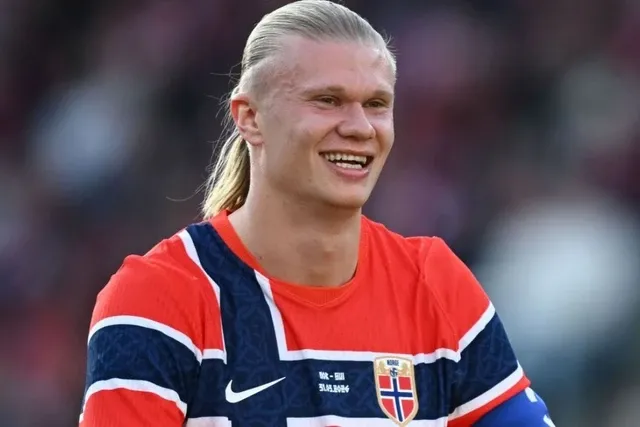
Every discussion surrounding Norway begins with Erling Haaland. The Manchester City striker enters the World Cup as one of football's biggest global stars and arguably the most important player in Norwegian football history since the 1990s golden generation. His pedigree once again shone when he smashed 16 goals in the qualifying campaign, at least eight more than Harry Kane of England, who was the next best scorer in the qualifiers, as he enters the tournament winning a third Golden Boot in the Premier League in four years. However, Haaland's impact extends beyond goals. His presence alone changes how opponents defend. His physical attributes make him uniquely difficult to contain. He combines elite pace with extraordinary strength and ruthless finishing ability. Whether attacking crosses, running behind defenders or creating chances from limited opportunities, Haaland possesses the tools to decide matches single-handedly. The 25-year-old telepathic combination with Arsenal’s Premier League-winning captain, Martin Odegaard, is lethal as he also opens the space for the creator to usher in more devastation. After ruling at the club level, the World Cup also represents a defining moment in Haaland’s international career as he looks to unleash his fury at the global stage with such talented individuals around to feed him.
Talent to Watch: Antonio Nusa

While the spotlight will be on Haaland for obvious reasons, eyes will be peeled on an electrifying winger who will light up the left corridor that few can match in the World Cup this summer. Emerged as one of Europe's brightest young prospects, the explosive, skilful dribbler and dynamic player, scoring the most beautiful goals, cutting in on his right foot, Antonio Nusa is already attracting major interest from top spenders in Europe for his fascinating talent, impact, consistency with the national team and unreal maturity even at 21 years of age. His dribbling and beating defenders in 1v1 situations are an undying highlight reel. Norway possess an exciting talent capable of making a significant impact at the FIFA World Cup 2026. Also versatile in operating in either flank, Nusa also adds unpredictability and flair to Norway's attack, often stretching defences and creating space for teammates. His five-goal contributions in six games in the qualifiers speak volumes. If opponents focus heavily on containing Haaland and Martin Ødegaard, Nusa could become the player who punishes them. Still only in the early stages of his international career, the World Cup presents an ideal platform for him to announce himself on the global stage and also make the next move his career deserves at the club level.
How will Norway Lineup at the FIFA World Cup 2026?
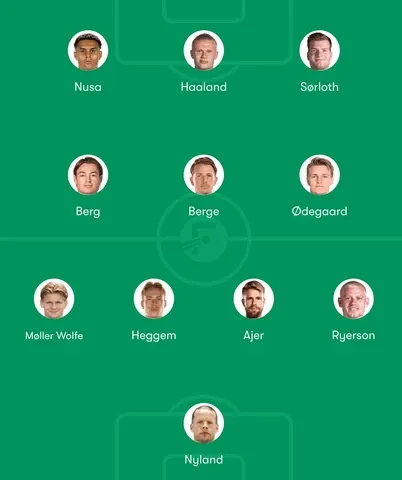
Stale Solbakken has primarily used a 4-4-2, 4-3-3 and even a 4-1-4-1 formation in the qualifiers, with the latter used in the 4-1 thrashing of Italy at San Siro to book their place in the finals. However, referring to the quality of opponents in the group, the manager could adopt a more compact approach. Against physical sides such as Senegal or technically superior opponents like France, Norway may prioritise defensive organisation before attacking through transitions. Despite questions on the goalkeeping front, Nyland is the preferred option in between the sticks. Norway will have one of the best creative full-backs around in Dortmund’s Julian Ryerson, who recorded the most assists for a defender in a single Bundesliga season with 15 and was involved in five goals for his country in the qualifiers. He would look to combine with another extremely talented winger, 22-year-old former Man City player Oscar Bobb, if he starts, to cause chaos on the right flank. Similarly, left-back David Møller Wolfe, who incidentally plays for Wolves, will want to continue his excellent understanding with Nusa, providing the width for him to underlap or allow the RB Leipzig star to cut inside with his elite dribbling and directness, causing havoc in the box.
The centre-back pairing looks to be fixed between Brentford’s Ajer and Bologna’s Torbjørn Heggem, while former Napoli man Leo Østigard could arrive late in the game to see things out. The midfield will have three, as Odegaard, who registered a record seven assists, is back fit to feature for the side for the first time since September last year as the main creative source. Fulham’s Patrick Berge will provide defensive stability from a deeper position, while either of Bodo/Glimt’s Champions League fairytale journey star Patrick Berg, Morten Thorsby of Cremonese, who provided three assists in the qualifiers, Sassuolo’s Kristian Thorstvedt or the returning Benfica’s Fredrik Aursnes could partner him. Alexander Sorloth, who was the next best scorer for his side in the qualifiers after his partner in goals, Haaland, could play alongside the Manchester City star in front two to bring more aerial or physical presence inside the box or could move to the right wing to come central, hold the ball and provide width for the fullbacks or make space for the class forward. There are several attacking options in the team to make every system effective with talents like Strand Larsen, Andreas Schjelderup or one of Glimt’s heroes, Jens Petter Hauge, who can transform results from the bench.
Norway Group C Fixtures and Opposition in FIFA World Cup 2026
17 June 2026
Iraq vs Norway - Gillette Stadium, Foxborough (03:30)
23 June 2026
Norway vs Senegal - MetLife Stadium, East Rutherford (05:30)
27 June 2026
Norway vs France - Gillette Stadium, Foxborough (00:30)
Norway’s return to the World Cup is marked with a game against Iraq, similarly playing at this stage after a long time, at the Gillette Stadium in Foxborough on 17 June 2026. This will be an important tournament opener for Solbakken’s side, as this is the most likely fixture to take three points from. They need the momentum as they face African giants Senegal in the second group game five days later, which is set to be a direct battle for the second spot. Favourites to win the group, France will pose the biggest challenge in their final group game on 27 June 2026.
Norway FIFA World Cup 2026 Prediction
Stale Solbakken’s team has been tagged the darkhorses of the 2026 World Cup and they have to stay true to it in probably the most challenging group at the competition. With the eight best third-placed teams progressing to the knockout stage, they should be making it out of the group stages, but a talented side which contains some of the best players in certain positions cannot settle for that fight. The combination of Haaland's goals, Ødegaard's creativity and an increasingly mature tactical structure gives them a genuine chance of finishing in the second spot, provided that Les Bleus are the winners of this group. They clearly have an easier fixture list than their rivals for the spot, Senegal, who will be playing France first, while Norway fancy all three points against the lowest-ranked opponents in the group, Iraq, before heading into the fixture against the Lions of Teranga, with them being the side having momentum. Another win will be enough to put them in the knockouts, although a draw would be enough, provided they don’t harm their goal difference against France.
In the Round of 32, Norway will face the runner-up team of Group E if they finish second in their group as well. That will let them cross paths with Ecuador or the Ivory Coast if Germany doesn’t fail to win that group. A matchup with the former is more likely, but the team should advance to the Round of 16 stage regardless. There will be real spices at this juncture of the competition as Haaland and co are more likely to face record winners Brazil. This fixture could define them as even if they pose the threat to trouble the Selecao, their defence has to safeguard itself from a top-quality attack, which is a tall task after all the talk about how the backline will hold. However, the team poses the quality to make it as far as the semifinals too if they overcome the Brazilian challenge, avoid Argentina or Spain in the quarterfinal and frustrate co-hosts USA, who are the other option. Regardless of how far they progress, Norway's return to the FIFA World Cup after almost a generation is one of the defining stories of the tournament and with Erling Haaland leading the line, few teams will relish facing them in North America.
Also Read | Norway FIFA World Cup Records and Stats