
NASCAR and Formula 1 are the two biggest motorsport events in the world. Both are well-known for their intense livery. While both involve high-speed racing, the cars themselves are drastically different. This article offers a clear and deep insight into the design philosophies, technological developments, and difficulties faced by Formula 1 and NASCAR cars, which will be useful to non-fans and experienced motorsport enthusiasts.
NASCAR vs Formula 1: The Basic Principle
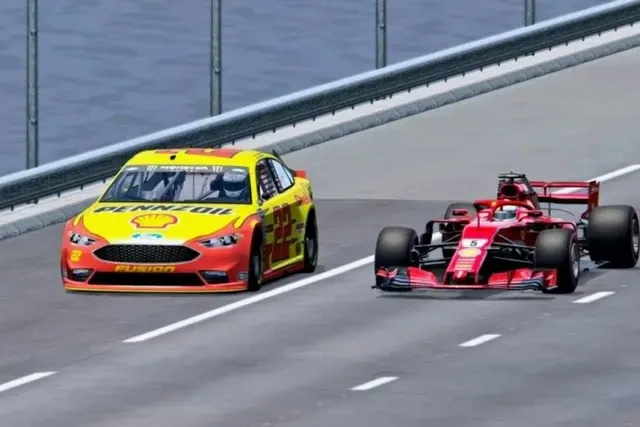
NASCAR (National Association for Stock Car Auto Racing): These are the stock cars that were made to drive on American wheels. These cars, known as "Next Gen" cars, are designed to resemble production vehicles. Although they are significantly modified. They race on oval tracks, enclosing close-pack racing.
Formula 1 (F1): The pinnacle of motorsport, F1 cars represent the height of technological advancement. They are engineered for speed and agility on sharp or fast road courses, focusing on aerodynamics and state-of-the-art engineering.
NASCAR vs Formula 1: The Technological Philosophies
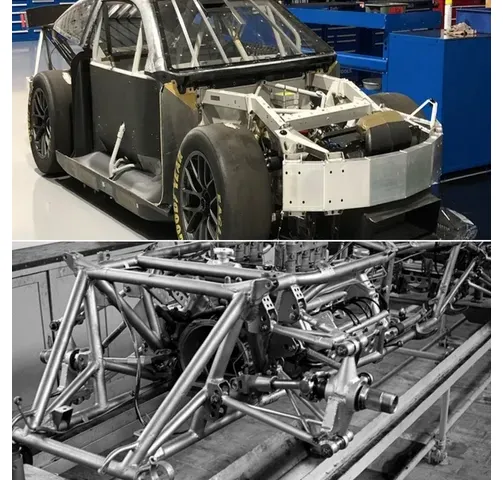
Both NASCAR and Formula 1 cars can only be driven on race tracks. While looking at both cars, one can easily say NASCAR is closed sedans, and Formula 1 is open-wheel racing. The core difference lies in the design philosophy. NASCAR has a robust design for close racing, while F1 pushes the boundaries of technological innovation.
Let us measure both the fast-paced machines on different scales to get a better look at what lies inside the chassis and design.
1. Aerodynamics:
NASCAR: In NASCAR racing, cars have relatively simple aerodynamic packages designed to create a large "draft" effect, allowing for close racing and overtaking. The emphasis is on reducing drag for high speeds on oval tracks.
Formula 1: Aerodynamics are the biggest players. Various design elements, including complex wings, diffusers, and other aerodynamic devices, generate significant downforce, which enables incredible cornering speeds. For more information, do read F1 car Aerodynamics Explained
2. Engines:
NASCAR: In NASCAR, cars use 5.8L naturally aspirated V8 engines. These engines can generate about 650 HP-700 HP of maximum power, depending upon the nature of the oval tracks. Under the hood, the car offers limited engine mapping and has no hybrid system within the chassis.
Formula 1: Formula 1 cars are technological marvels. They use highly complex 1.6L turbocharged hybrid engines. This engine can generate approximately 1000 HP of power or beyond, making it the beast on the racing track. F1 cars can easily go under different engine configuration mapping for various racing tracks. Here’s our detailed article on All you need to know about F1 car engines
3. Suspension and Tires:
NASCAR: Uses a simpler double-wishbone suspension setup designed for oval track stability. Tires are designed for durability over long race distances.
Formula 1: Features advanced suspension systems designed for precise handling on complex road courses. Most F1 cars have a pull-rod or push-rod suspension system. Do read our detailed article on Decoding F1 Car Suspension
4. Electronics:
NASCAR: It uses a relatively limited amount of electronic assistance.
Formula 1: F1 cars depend on sophisticated electronics, including engine management, traction control, and data acquisition systems. They also have an in-built energy recovery system to recover the engine power through advanced braking.
NASCAR vs Formula 1: At A Glance
Features | NASCAR | Formula 1 |
Car Design | Stock Car Appearance, purpose-built cars for oval tracks | Open-wheel cars, built for street and racing tracks. |
Track Type | Oval Tracks | Street circuits and road courses |
Aerodynamics | Simple, more focused on drafting | Complex, more focused on downforce |
Engine | 5.8L naturally aspirated V8 engine | 1.6L turbo hybrid engine |
Suspension | Simple, designed for stability | Advanced, designed for precise handling |
Tyres | Durable | HIgh-grips, from soft to hard and medium |
Electronics | Limited | Extensive |
Goal | Close-packed racing | Maximum speed, technological innovation |
Top Speed | 250 MPH | 320 MPH |
Both racing cars are now evolving with time. NASCAR's Next-Gen car introduces more modern technology while Formula 1 continues pushing toward hybrid power and sustainable fuels. Nowadays, NASCAR preserves its traditional appeal with close, entertaining racing. Formula 1 positions itself as a technological showcase and global luxury brand.
What’s your view on both cars? Tell us in the comments below. Follow Chase Your Sport for more updates on Formula 1 and NASCAR racing.