
After making themselves regular in the European Championship, Austria made a step up by qualifying for their first FIFA World Cup in history in 28 years. The Burschen went through a dramatic qualification journey to secure their place in the 2026 edition hosted in North America that split onto the final day. Austria is now bringing the most talented squad in the current generation, guided by a revolutionary coach, Ralf Rangnick, to the competition, where they will hope to prove their point after impressing in the last Euro campaign in 2024. Having drawn alongside defending champions Argentina, African heavyweights Algeria and debutants Jordan in Group J, the returnees to the global stage have to produce their very best to qualify for the knockout stage for the first time since 1978.
Austria FIFA World Cup History
The 2026 World Cup will be the seventh time Austria has appeared at the premier competition of international football. This is their first World Cup tournament this century, having last participated at this level back in 1998 in France. It ended their longest wait for the tournament, which was a lot more than their 16-year exile from 1958 to 1978. Austria was among the earliest teams to have participated in the World Cup after making their debut in only its second edition and achieving fourth place. Their next participation came two editions later, post-World War II, in 1954 in Switzerland, where they achieved their best finish in the competition's history by ending in third place. The team has failed to hit those heights again and apart from a quarterfinal finish 48 years ago, the rest of their World Cup campaigns have ended in now-defunct second round or the group stages. Four Austrian players have made the joint-most appearances at the World Cup stage, namely Friedrich Koncilia, Erich Obermayer, Bruno Pezzey and Herbert Prohaska, while Erich Probst has netted the most goals for his nation with six, all coming in a single tournament in 1954.
Austria Qualification and Preparation for the FIFA World Cup 2026
Austria had a close fight with Bosnia & Herzegovina in the battle for the top spot in their qualification group to book their place in the World Cup directly. Rangnick’s team had a dominating start to their campaign, winning their first five games. The period included defeating Bosnia in the opposition den and obliterating San Marino at home by 10-0 to record their biggest ever win in history. At the moment, Austria was looking untouchable, but they were forced to come down to earth with a shock loss away to Romania. It opened the door for their closest competitor, Bosnia, although the team went back into the stride with a 2-0 win against Cyprus to set the decider against the former at home.
Austria only needed to avoid defeat in the final game to seal their place in the finals. Yet, they seemed to capitulate when Haris Tabakovic gave the visitors a shock 12th-minute lead, silencing Ernst-Happel-Stadion. The host had to settle for a playoff spot in this scenario, the one they could not have afforded after such an excellent qualifying campaign with the World Cup within touching distance. Substitute Michael Gregoritsch ensured that his side relished the dream of playing at the finals with his 77th-minute equaliser, sealing top spot and ending Austria’s long-standing separation from the World Cup. They ended two points to the good to secure a direct group stage berth, sending Bosnia to the playoffs, scored 22 goals and impressively conceded only four. Here’s the Austria FIFA World Cup 2026 Qualification Stats and Results
Still scoring goals for fun, the 37-year-old Marko Arnautović ended up the top scorer in the qualifiers, bagging eight goals with an impressive four-goal haul coming against San Marino. The second top scorer with four, Gregoritsch, came off the bench to score some of those, with the most important one certainly being the leveller in the final qualifying game that sent them to the biggest stage of all. Their excellent form in the qualifiers was maintained as Austria dominated the friendlies in the March international window of 2026 with a huge 5-1 victory over Ghana and a 1-0 triumph over South Korea, while they have lined up a friendly against Tunisia for the ultimate warm-up game ahead of their much-awaited World Cup opener.
Austria Squad for FIFA World Cup 2026
Goalkeepers: Patrick Pentz (Brøndby IF), Alexander Schlager (FC Salzburg), Florian Wiegele (Viktoria Plzeň)
Defenders: David Affengruber (Elche), David Alaba (Real Madrid), Kevin Danso (Tottenham Hotspur), Marco Friedl (Werder Bremen), Philipp Lienhart (SC Freiburg), Phillipp Mwene (Mainz 05), Stefan Posch (Mainz 05), Alexander Prass (TSG Hoffenheim), Michael Svoboda (Venezia)
Midfielders: Christoph Baumgartner (RB Leipzig), Carney Chukwuemeka (Borussia Dortmund), Florian Grillitsch (SC Braga), Konrad Laimer (Bayern München), Marcel Sabitzer (Borussia Dortmund), Xaver Schlager (RB Leipzig), Nicolas Seiwald (RB Leipzig), Romano Schmid (Werder Bremen), Alessandro Schöpf (Wolfsberger AC), Paul Wanner (PSV Eindhoven), Patrick Wimmer (VfL Wolfsburg)
Forwards: Marko Arnautović (Crvena Zvezda), Michael Gregoritsch (Augsburg, on loan from Brøndby IF), Sasa Kalajdzic (LASK)
Head Coach: Ralf Rangnick
Strengths of Austria Football Team
Like a classic Ralf Rangnick team, this Austrian team is adept at taking the ball away from the opposition with their gegenpressing strategy and recovering possession swiftly without letting others take control. They are one of the best teams at transitioning, turning defence into attack in the blink of an eye, with their intelligent midfield and speedy wingers striking the opposing team with lightning speed. Despite their high intensity and risk-filled play, they managed to keep their defence full-proof, as indicated by their record of conceding just four goals in the eight qualifying rounds. They also have a fantastic attack led by the evergreen forward Arnautovic, who still maintains predatory instincts and scoring numbers as a striker in his prime. If he fails to perform, the Burschen could call on Gregoritsch to create a difference. The forward position has an excellent depth and so is the midfield, containing the classy playmaker Marcel Sabitzer. Austria is also unpredictable because of their tactical flexibility without relying on a single system or the same set of players in the starting XI.
Weaknesses of Austria Football Team
The system could produce its own disadvantages and it is not different from all the previous teams coached by Rangnick has suffered with. In his system, Austria has to be relentless with their pressing and intensity, running constantly, which will be a difficult job to maintain under the extreme heat conditions at the World Cup and the proximity of games. While the midfield is full of energy and has the right personnel to perform the task, other areas often fail to back them up. Also, more tactically astute opposition could also pick the holes and expose them through their style of play. The defence, though solid, could be compromised if one of their starting centre-backs gets injured or is suspended. The team will then have to rely on their 33-year-old captain, David Alaba, who barely had a consistent number of games in the last few seasons due to his countless injury problems. That will be a real headache for Austria, who will hope that such a situation does not play out.
Key Player: Marcel Sabitzer

The Austrian team does not depend on one superstar, as the system demands that every player works as a collective. However, it is no denying that Marcel Sabitzer will pull the strings for the team and their faith is intertwined with how he delivers at the global stage. While he has not produced the required numbers at the club level since moving out from Leipzig five years ago, he remains the most consistent playmaker for the national team. The Borussia Dortmund midfielder produced six goal contributions in the qualifiers, with the same number of goals and assists and has been involved in at least a goal in seven of his past 10 games for Austria. His technical ability, dynamism, versatility, creativity and vision to pick out teammates on the break is second to none in the side. It is now that he has to step up in a major tournament and the World Cup gives him the stage to shine like never before.
Manager: Ralf Rangnick
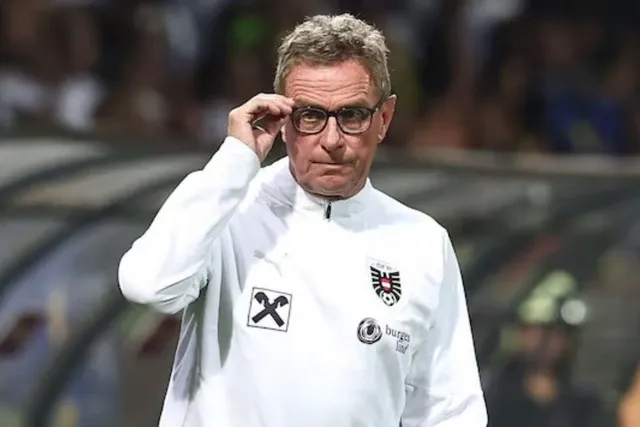
Has been a revolution since he stepped into the dressing room for Austria and anywhere he has gone, Ralf Rangnick is now experiencing his second major competition with the national team and probably the most important one to date. Before he took charge in 2022, Austria was nothing more than a medium to average team chasing the glory years of the past, but post his arrival, the side has found an identity. Rangnick has also built up a project there with the nation assembling their best crop of talent after a long time and suited them well with the manager’s style of play. The Euro 2024 showed the potential of the team as they incredibly topped a group containing Poland, the Netherlands and France. While their journey ended in the Round of 16 by an equally, if not better-talented, Turkey team, the side left a lasting impact, showing just how well-crafted they have become under their star manager. Now, after adding to the progress with the qualification for the World Cup, Rangnick will be determined to guide the team to produce another memorable outing in North America.
How will Austria lineup at the FIFA World Cup 2026?
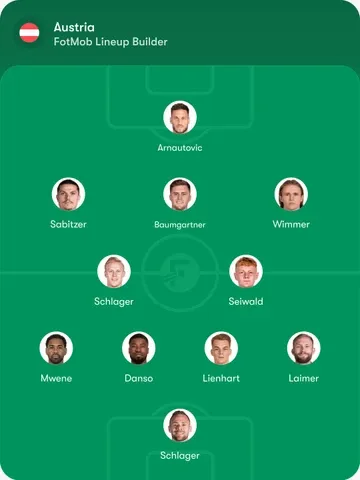
Rangnick favours a 4-2-3-1 formation that brings the best out of his system and the strategy does not change, no matter the opposition. He needs the ideal personnel to take down his competitors with endless pressing and bring the energy to do it. Hence, even though Austria has no fixed starting eleven, these players are required for the system to function well. RB Salzburg keeper Alexander Schlager looks to be the preferred choice ahead of Brøndby’s Patrick Pentz for the number one position, while there is a balancing act of whether Konrad Laimer will be played in midfield, his original position, instead of right-back, where he plays the most for Bayern Munich. Laimer’s qualities in the middle of the park will be needed with Mainz’s Stefan Posch taking up the role instead, having contributed four goals in the qualifiers from his position. The latter’s clubmate, Phillipp Mwene, though, is an undisputed starter on the opposite flank. Freiburg’s talented defender Philipp Lienhart and the reliable Kevin Danso of Tottenham Hotspur are the likely centre-back partnership for the tournament, with captain Alaba possibly coming late in games to shut things up. The midfield is the most enticing part of this Austrian team because of its talent and depth. It revolves around Marcel Sabitzer, who not only offers creativity but also does so by playing in different positions on the pitch.
He can play just behind the country’s most-capped player and record goalscorer with 47 goals from 132 appearances, the former Stoke City and Inter Milan centre-forward, Marko Arnautović, who is still going strong at his age, coming off a sensational season by scoring seven goals and eight assists in 16 matches for Serbian giants Red Star Belgrade, helping them clinch their record-extending 11th Super Liga. The 32-year-old midfielder could also slot into the unorthodox left-winger role to bring a new dimension to Austria’s attack, allowing Christoph Baumgartner to fit into the number 10 role, who is also in form, contributing to 25 goals for Leipzig this season. Sabitzer could also slot further back in the central midfield, especially against low blocks, where the team won’t be able to press as much and will need creativity from deep or someone to drop in front of the centre-backs and move the ball to break the opposition’s press. If Sabitzer stays forward, which is likely, Xaver Schlager and the talented Nicolas Seiwald could take the central duo, while Carney Chukwuemeka is an excellent option to come off the bench and contribute after his scoring in his debut in the March friendly against Ghana, since switching his allegiances from England to Austria in the same month.
Austria Group J Fixtures and Opposition in FIFA World Cup 2026
Wednesday, 17 June 2026
Austria vs Jordan - Levi's Stadium, Santa Clara (09:30)
Monday, 22 June 2026
Argentina vs Austria - AT&T Stadium, Dallas (10:30)
Sunday, 28 June 2026
Algeria vs Austria - Arrowhead Stadium, Kansas City (07:30)
Austria FIFA World Cup 2026 Prediction
The quality and talent in the Austrian squad should take them to the knockout as a top two team. Apart from world champions Argentina, whom they can trouble as well, there is no real big test for Ralf Rangnick’s men in the group. Algeria could be a competitor and will seek revenge for the infamous ‘Disgrace of Gijon’ of the 1982 World Cup, where Austria colluded with Germany to play out a draw to eliminate the African giants from the competition, but even if the team is talented, they are not the Algerian side of the past. The debutant Jordan will require a task of immense nature to be a thorn in the side’s way, so anything less than a top two finish will be a real shock for the Burschen. They are likely to make the knockout stages of the World Cup for the first time, but there is a real chance they can get eliminated in the Round of 32 itself. Austria are expected to face Spain, the favourites to win Group H, if they finish second, as La Albecieste is likely to take the top spot in their group. So Rangnick’s men might fancy finishing third, as weird as it sounds, to be among the best eight teams in the position, as they then likely be paired with one of the hosts of the tournament or similar quality sides or even lower-ranked teams, which might help them go deeper into the competition.
Also Read | Austria FIFA World Cup Records and Stats