
Breaking a 52-year-long wait, the Democratic Republic of Congo, famously known as DR Congo, will be returning to the global stage for the 2026 FIFA World Cup hosted in Canada, Mexico and the USA. After half a century of near misses and heartbreak, the Leopards will finally have the chance to show the impact of their phenomenal rise in African football in the now biggest competition in history, with 48 nations taking part. The team has entered another golden age under the meticulous guidance of Sébastien Desabre, with them not just looking to participate in the main stage, after a historical qualification, but leave a mark on the tournament while avoiding the embarrassment of their maiden World Cup.
DR Congo FIFA World Cup History
The side has only been at the World Cup stage once before, which came back in 1974, when the nation was known as Zaire. That achievement also came after they established themselves as the best on the continent in those years by winning the Africa Cup of Nations twice in 1968 and 1974. The World Cup qualification in the same year as the latter success brought a sense of pride as they became the first Sub-Saharan African nation to qualify for the tournament, even more so when the nation was suffering under the pressures of a brutal domestic regime. However, the performance on the main stage quickly became forgettable as the Leopards failed to show the force they had become, facing humiliation at the world stage.
Placed in a difficult group with Scotland, Yugoslavia and Brazil, DR Congo failed to score a single goal and conceded eye-brow-raising 14 times to finish bottom of the pile. More than half of those goals were leaked in their infamous 9-0 defeat to Yugoslavia, equalling a finals record for the worst defeat in the tournament after suffering a 2-0 loss to Scotland in the opener, while a 3-0 defeat to Brazil in the final game all but confirmed their brutal exit. Now, having ended their exile at the World stage, the current generation of players is desperate to make happy memories in the 2026 edition of the tournament with a squad full of workhorses this time.
DR Congo Qualification to FIFA World Cup 2026
The qualification journey to North America for the World Cup will be etched forever in the memories of the DR Congo fans, as their team showed unreal solidity, tactical discipline and a never-dying mentality to finally make the World Cup dream a reality. Finding themselves alongside World Cup regulars and AFCON winners on the pitch, Senegal, in the same CAF qualifiers group, put up a close fight for the automatic spot. They drew with the Lions of Teranga in the first match but suffered a narrow 3-2 loss in the reverse clash, despite going two goals up within half an hour, which ultimately proved to be the difference as they missed out on the top spot by two points. However, their performance, especially their defensive side of things, gave enough credibility for the side to accomplish their objective through the playoffs.
Manager Desabre guided his side to do just that as they stunned another African heavyweight and World Cup regular, Cameroon, with a stoppage-time goal from Chancel Mbemba in the 1-0 victory to progress to the next round, where captain fantastic shone again by scoring the decisive penalty in the tie-breaker to eliminate an extremely talented Nigerian side, coming back from gong down in just three minutes and grab the inter-confederation playoffs taking place in one of the 2026 World Cup host nations, Mexico. Having downed two favourites to qualify for the tournament and crafting somewhat of an underdog story, it was inevitable that the Leopards would make the tournament, but Jamaica made it harder than expected. In the end, an extra-time winner from Axel Tuanzabe clinched a narrow 1-0 victory to put the Central African side in dreamland, sparking nationwide celebrations.
DR Congo’s Form ahead of the FIFA World Cup 2026
The Leopards demonstrated their calibre during the qualification process, proving to be a formidable opponent. Aside from an unexpected loss to Sudan early in the qualifiers and that narrow defeat to Senegal, the team remained resilient on their path to reach this stage. Their defensive masterclass was proven by the fact that they conceded just seven goals and kept eight clean sheets in that period, a momentum they carried through to the Africa Cup of Nations hosted in December 2024 through to January this year. They secured clean-sheet victories against Benin and Botswana, but another 1-1 draw against Senegal, meeting them once again in a different tournament and also taking the lead, let them finish second in their group due to an inferior goal difference. However, their luck ran out in the Round of 16 stage as they conceded in the last minute of extra-time in the 1-0 defeat to Algeria to bow out of AFCON. Despite that, they reclaim their momentum after the inter-confederation playoff win against Jamaica and is entering the World Cup with full confidence.
DR Congo 26-player Squad for FIFA World Cup 2026
Goalkeepers: Lionel Mpasi-Nzau (Le Havre), Timothy Fayulu (FC Noah), Matthieu Epolo (Standard Liege)
Defenders: Chancel Mbemba (Lille), Aaron Wan-Bissaka (West Ham), Arthur Masuaku (RC Lens), Axel Tuanzebe (Burnley), Joris Kayembe (Genk), Dylan Batubinsika (AE Larissa), Rocky Bushiri (Hibernian), Steve Kapuadi (Widzew Lodz), Jeremy Ngakia (Watford)
Midfielders: Samuel Moutoussamy (Atromitos), Charles Pickel (Espanyol), Edo Kayembe (Watford), Noah Sadiki (Sunderland), Théo Bongonda (Spartak Moscow), Nathanaël Mbuku (Montpellier, on loan from Dinamo Zagreb), Ngal'ayel Mukau (Lille), Grady Diangana (Elche), Meschack Elia (Alanyaspor), Brian Cipenga (Castellon)
Forwards: Cédric Bakambu (Real Betis), Yoane Wissa (Newcastle United), Simon Banza (Al-Jazira), Fiston Mayele (Pyramids FC)
Undoubtedly, Sébastien Desabre has stuck to the core group that scripted a remarkable CAF qualification campaign, a decent AFCON and the history-making win against Jamaica to secure DR Congo's first World Cup squad in 52 years. Unlike the Zaire team of 1974, which was composed entirely of domestic players, the 2026 squad is a sophisticated blend of European-based stars and battle-hardened African veterans. This roster features talent from Europe’s top five leagues, including the Premier League, Ligue 1 and the Bundesliga, giving the current golden generation of players a better chance of proving themselves at the global stage. The squad is led by their inspiring captain and a fine centre-back, Chancel Mbemba. However, PSG's youngster, who became the second youngest scorer in the Champions League final last year, Senny Mayulu, is not selected despite switching allegiance from France. It is because his switch to gain DR Congo nationality came a little too late in April 2026, with injury drawbacks also becoming a key factor in his non-selection. Desabre, though, has stated that the 19-year-old will be part of his main plan for the national team post-World Cup.
Strengths: The Defensive Wall
As proven countless times, DR Congo’s greatest strength lies in its defensive organisation backed by a reliable goalkeeper, high-performance backline, protection by a tireless midfield and forwards ready to take the extra workload of defending the front. It makes the side frustrating to break down and makes them a feared proposition as a result. Led by captain Chancel Mbemba, the back four is physically imposing and aerially dominant. The inclusion of Aaron Wan-Bissaka and Axel Tuanzebe has added a layer of elite tactical awareness that was missing in previous years. Secondly, their physicality is second to none, with the team always looking imposing and not thinking twice about playing it in the ‘dirty’ way. In a tournament where fatigue plays a major role, the Leopards possess incredible stamina and strength in the middle of the park, with the pair of Noah Sadiki and Samuel Moutoussamy capable of wiring the opposition down, making them a nightmare to play against in transition.
Weaknesses: Creative Void and Lack of Tournament Experience
While they are hard to break down because of their sturdy defence, unending stamina and warrior mentality, the team has been occasionally let down due to their struggles with creative spark and attacking impetus in crucial games. It has become an issue recently because of their prime creator, Yoanne Wissa, spending a big chunk of this season on the sidelines with a knee injury suffered during national duties in September 2025. For that, the team had to rely on 34-year-old Cédric Bakambu to do the goods, which is a lot to ask. DR Congo heavily depends on getting goals from wing play and set pieces, so if their wide men are neutralised, the service to the strikers can become erratic. Furthermore, lack of tournament experience is a factor. Only a few players have played on a stage this large, and the psychological pressure of the World Cup is vastly different from the Africa Cup of Nations or the qualifiers on the home continent. How they handle the big game nerves in a tournament like this on foreign soil will be critical.
Key Players
Chancel Mbemba (Defender/Captain)
Known as the ‘Chancellor’, captain Chancel Mbemba is the true heartbeat of the team and reflects everything about the DR Congo’s iron mentality. His leadership skills are unmatched, with his presence helping Leopards to be fearless on the pitch without compromising the discipline that has become their identity, which brought them here. However, it is also his character on the pitch that puts the trust in him, as Mbemba is certainly one of the best African centre-backs at the moment, with his awareness and excellent tackling qualities making him difficult to beat easily. His knack for scoring with headers from corners using his tall, firm structure makes him the team’s most indispensable player in crucial moments.
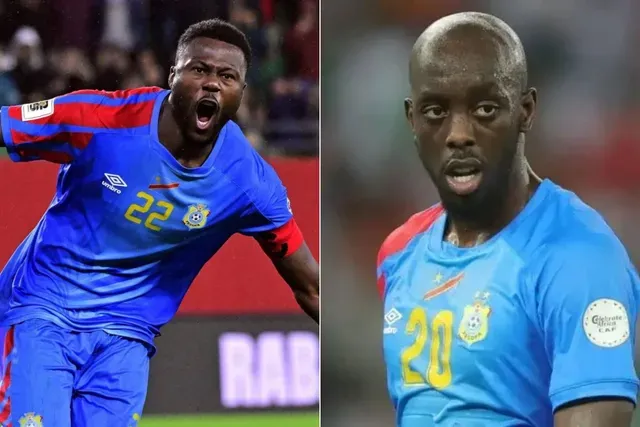
Yoane Wissa (Forward)
The major creative hub for the side, Yoane Wissa, provides the X-factor for DR Congo and his absence due to a months-long injury was thoroughly felt in the lack of attacking threat, even though the side did not crumble in the qualification race. Wissa showed his class with Brentford, contributing to 49 goals in his four seasons there, but his promising move to Newcastle United last summer could not produce the same effect because of the knee injury sustained. Now back in the national team setup and playing 90 minutes in the interconfederation playoffs from the start, Wissa wishes he could regain his full fitness in the World Cup and become a deadly weapon on the counter-attack for his side with his pace and clinical finishing.
How will DR Congo Lineup at the FIFA World Cup 2026?
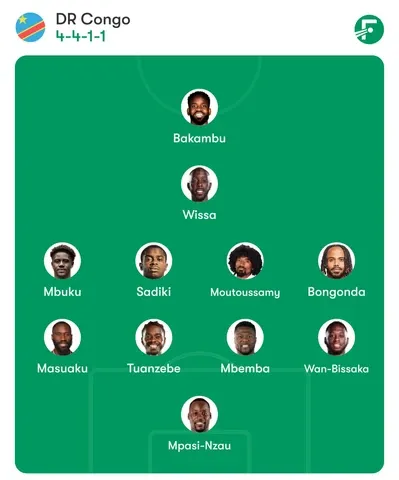
Sebastien Desabre has brought a revolution to DR Congo since taking charge in March 2023, completely transforming the side with discipline and opting for versatility for his side, playing in multiple systems, whether it be a traditional 4-3-3 or a more defensive 4-5-1 or a 4-4-1-1, depending on opposition and situations in games. In the World Cup, he wants a more cautious approach, while also producing productive counter-attacking play. The undisputed number one, Lionel Mpasi-Nzau, will once be a crucial piece in that puzzle following his heroics during the AFCON and the World Cup playoffs, helping to secure his spot as the reliable last line of defence. The back-four of Aaron Wan-Bissaka, Tuanzabe, Mbemba and Arthur Masuaku remains unchanged, with the centre-back pairing as solid as it gets.
The Leopards have the best one-on-one defender in right-back Wan-Bissaka, who makes his flank almost impenetrable, allowing his former West Ham partner Arthur Masuaku to become the primary outlet for crossing and ball progression on the left. It allows the wingers with Nathanaël Mbuku on the left and Meschack Elia or Théo Bongonda, also capable of playing as a 10, on the right, to do their duty diligently. Midfielder Samuel Moutoussamy is the engine room of the side with his ability to disrupt opposition play and distribute the ball quickly, helping Wissa to combine his pace and creativity with either Bakambu or Simon Banza’s hold-up play and aerial ability to start deadly counters. Edo Kayembe could be introduced in the midfield if more solidity is required, while Fiston Mayele offers a different kind of intensity and is often used to harass tired defenders late in the game.
DR Congo Group K Opponents and Fixtures
Wednesday, 17 June 2026
Portugal vs DR Congo - NRG Stadium, Houston (22:30)
Wednesday, 24 June 2026
Colombia vs DR Congo - Estadio Akron, Guadalajara (07:30)
Sunday, 28 June 2026
DR Congo vs Uzbekistan - Mercedes-Benz Stadium, Atlanta (05:00)
DR Congo are placed in a very competitive Group K with one of the tournament’s top favourites and a team boasting world-class talent, Portugal, the opposition in their World Cup opener on 17 June 2026 in Houston. South American flair, Colombia is next on the list, as the Leopards returned to the place where they created history to be in the tournament in the first place in Guadalajara on 24 June 2026. Their final group stage game is four days later against debutant Uzbekistan, a fixture that will potentially decide their fate in the competition.
DR Congo FIFA World Cup 2026 Prediction
DR Congo enters the tournament as one of the underdogs, but the most dangerous of them all. The African nation has turned everyone’s heads with their solid discipline football, but it is now a big task for them to replicate their continental form on the world stage. The Leopards have not just been drawn into a difficult group, but also have a difficult beginning to it with Portugal in the opener and Colombia to face right after that. However, their style of play is perfectly suited for tournament football by staying compact, frustrating the opponent and striking on the break. Their opening match against the Selecao in Houston will be a trial by fire as they represent the ultimate test for the Congolese defence, so being more adventurous will not be a fit. They might try to do that against Los Cafeteros because of the latter’s defensive issues lately, but without a guess, their final group match against Uzbekistan is the most crucial of them all.
After the expansion of the World Cup from this edition, with an additional knockout round introduced, eight-best third placed teams will move into the Round of 32 alongside the top two from each group. So, DR Congo should aim for the third place if finishing in the top two isn’t possible. A second-place finish, provided that Portugal wins the group, will be considered a monumental success for the nation as it will create history of a first knockout qualification, while having a chance to escape the big hitters. However, a third-place finish won’t be the worst either, even though that is guaranteed to land them in a tie with England or Croatia. Regardless of their performance at the global stage, Desabre’s side has already reached a high ceiling, but they won’t be contained at the start, as qualification to the knockout will be considered a success for them.